
BarTov
Design & Creative
- Overview
- Challenge
- Design Approach
- Brand Design
- Product Design
- Conclusion

Birdie - Nature is the perfect spy

Disclaimer: Birdie is a fictional product concept created as part of an independent branding and design exploration. As far as I know, this exact product does not exist - though if it does, it is probably doing a very good job. The project was developed as a study of how a military intelligence platform could be positioned, branded, and experienced through design.
Overview
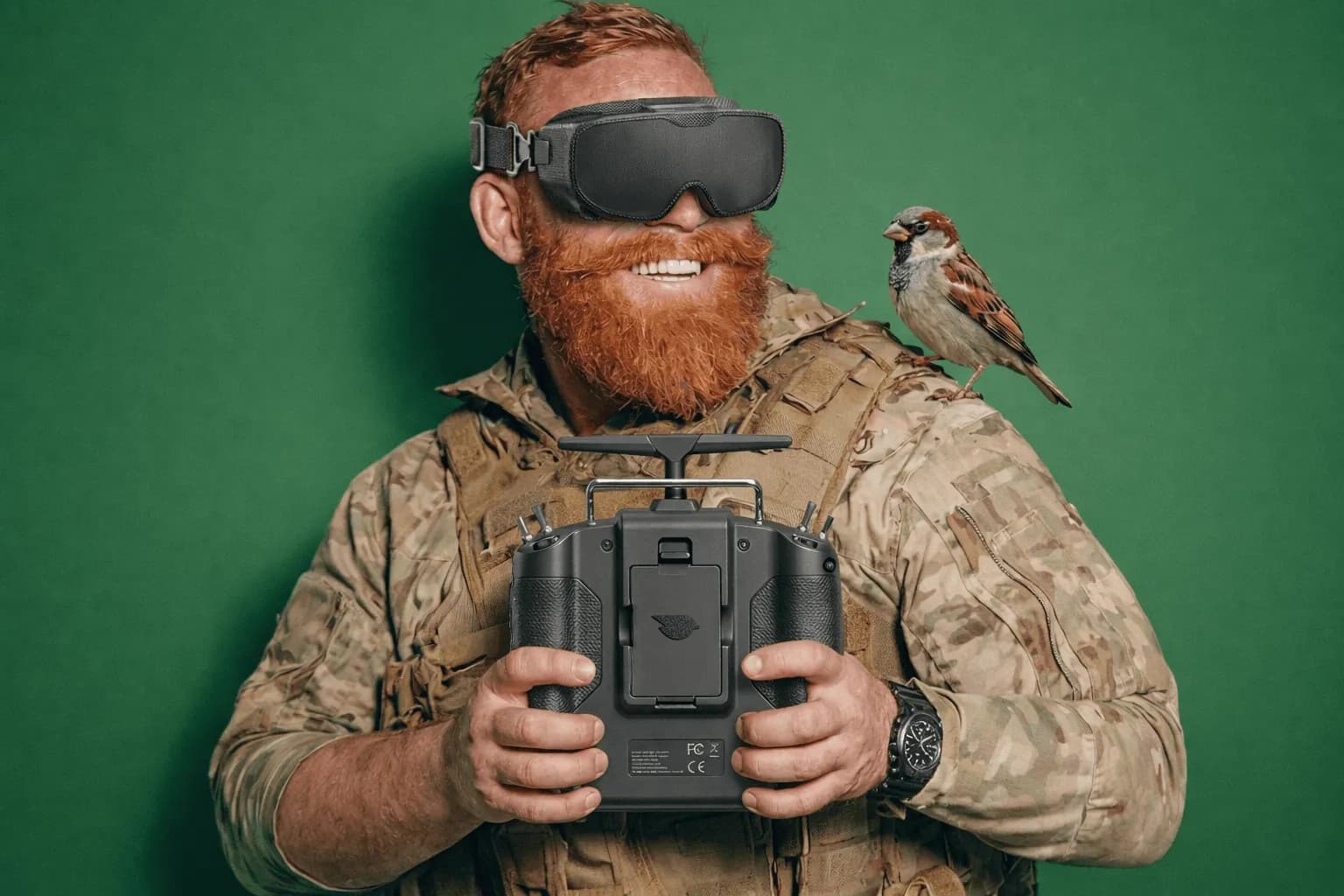
Birdie is a military intelligence platform built around an unusual idea: a surveillance system disguised as a bird.
Traditional intelligence gathering often relies on visible drones, stationary sensors, or large surveillance platforms that can be detected or avoided. Birdie explores a different direction: a robotic bird capable of navigating natural and urban environments while quietly collecting intelligence.
Because birds already exist everywhere in human environments, they offer a unique opportunity for stealth observation. They move through cities, rooftops, power lines, antennas, and trees without attracting attention. Birdie takes advantage of this natural presence, transforming an ordinary element of the environment into a powerful intelligence tool.
My work on the project focused on designing the brand identity and operating system for the physical device. This included the mission control interface, operator experience, and a cohesive design language for intelligence operations.
Challenge
Military software is often designed around technical capability first, while the needs of operators under pressure come second. As a result, intelligence platforms can become dense and cluttered, showing too much information without making the most important signals clear.
For Birdie, clarity was essential. Operators need to manage surveillance missions in real time: monitoring movement, adjusting the bird’s position, and reacting to changing conditions. The interface had to support fast situational awareness without adding visual noise or cognitive load.
The brand also needed to express a different kind of military technology. Birdie is an observation platform, not a weapon system, so the identity had to feel stealthy, intelligent, and precise rather than aggressive or intimidating.
Brand Challenge
Create a visual identity that feels modern, subtle, sophisticated, and credible within a military intelligence context.
Product Challenge
Design a calm, focused interface that helps operators quickly understand what matters and act with confidence under pressure.
The design needed to feel so relevant and effective that any intelligence or operational team would look at it and think: Danm, we want this!
Design Approach
The design process began with a conceptual question:
What would the operating system of a surveillance platform look like if the surveillance asset behaved more like a living creature than a machine?
Birds naturally possess many of the qualities intelligence agencies attempt to replicate through technology. They are mobile, capable of observing large environments from elevated positions, and able to move through spaces without drawing attention. Their presence rarely feels unusual, even in highly populated environments.
That idea shaped the design philosophy of the project:
01
Designed for Stealth
If the asset behaves like a living creature, the system cannot feel loud or mechanical. The design needed to express stealth, environmental integration, and subtle control.
02
Designed for Readability
Because the asset moves through unpredictable environments, operators need immediate clarity. The system therefore had to rely on hierarchy, focus, and restrained information flow.
03
Designed for Precision
While the asset feels organic, the system behind it still had to feel exact and controlled. Every decision needed to communicate precision, purpose, and technical sophistication.
Brand Design
Industry Landscape
Military and surveillance technologies are often branded through acronyms, technical terminology, or highly engineered visual identities. Companies typically use sharp symbols, geometric logos, and bold typography that communicate precision, engineering capability, and technological power.
While these identities are effective within the defense and aerospace industries, they often feel mechanical and distant. The visual language tends to emphasize control, hardware, and technological dominance.







Name and Logo
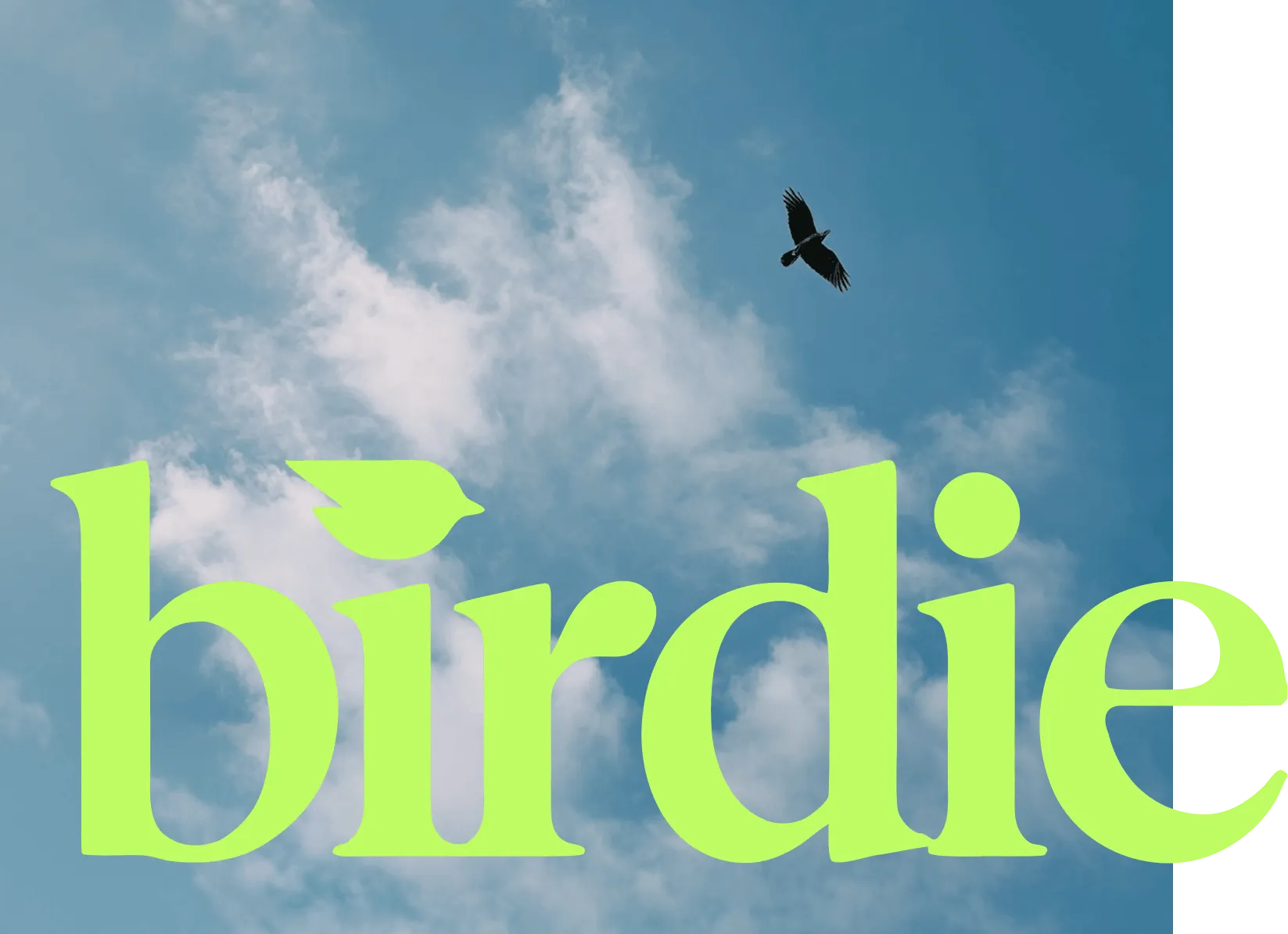
The name and logo were designed to capture the central tension behind Birdie: a system that feels light, familiar, and almost innocent, while quietly carrying the logic of surveillance. Rather than using technical or militaristic symbolism, the identity relies on subtlety to express stealth, observation, and quiet intelligence.
Simplicity
Unlike typical military names, Birdie is simple, ordinary, and almost disarming.
Familiarity
Because birds are everywhere and rarely noticed, the name reinforces the idea of stealth through familiarity.
Cultural Reference
The name echoes Bye Bye Birdie, giving it a softer and more recognizable tone.
Logo Concept
The logo integrates a bird silhouette directly into a high-contrast serif wordmark, making the mark feel both minimal and meaningful.
The result is an identity that feels light, modern, precise, and slightly mysterious. It avoids the visual heaviness often associated with military technology, instead expressing Birdie through clarity and precision. This gives the brand a quieter kind of confidence - one rooted in observation, stealth, and control rather than force.
Colors
The color system was designed to support both the operational setting and the idea behind the product. The interface uses a dark visual environment, inspired by intelligence and command systems, which helps reduce glare and keeps important information clear in low-light conditions. A vivid green accent connects the system to radar, night vision, and tactical instrumentation, while also subtly referencing the natural world behind the Birdie concept.
teal-800
#09435B
green-600
#1A3D24
lime-400
#BDFB62
neutral-100
#F5F2EC
neutral-950
#050C0F
Together, the dark background and green highlights create a visual language that balances several sides of the project. On one hand, it feels technical, precise, and rooted in surveillance systems; on the other, it carries an organic quality that reinforces the biological logic of the concept. It also gives Birdie a more modern and creative feel, helping it stand apart from conventional military hardware and read instead as a stealth intelligence platform embedded in its environment.
Brand Activation & Creative Strategy
The brand is built around a restrained and atmospheric visual language. It combines natural landscapes, muted military tones, high-contrast green accents, and minimal branded interventions to create a world that feels stealthy, modern, and quietly distinctive. Rather than relying on loud tactical graphics or heavy military symbolism, the style uses subtle placement, strong mood, and clean composition to let the idea of observation speak for itself.
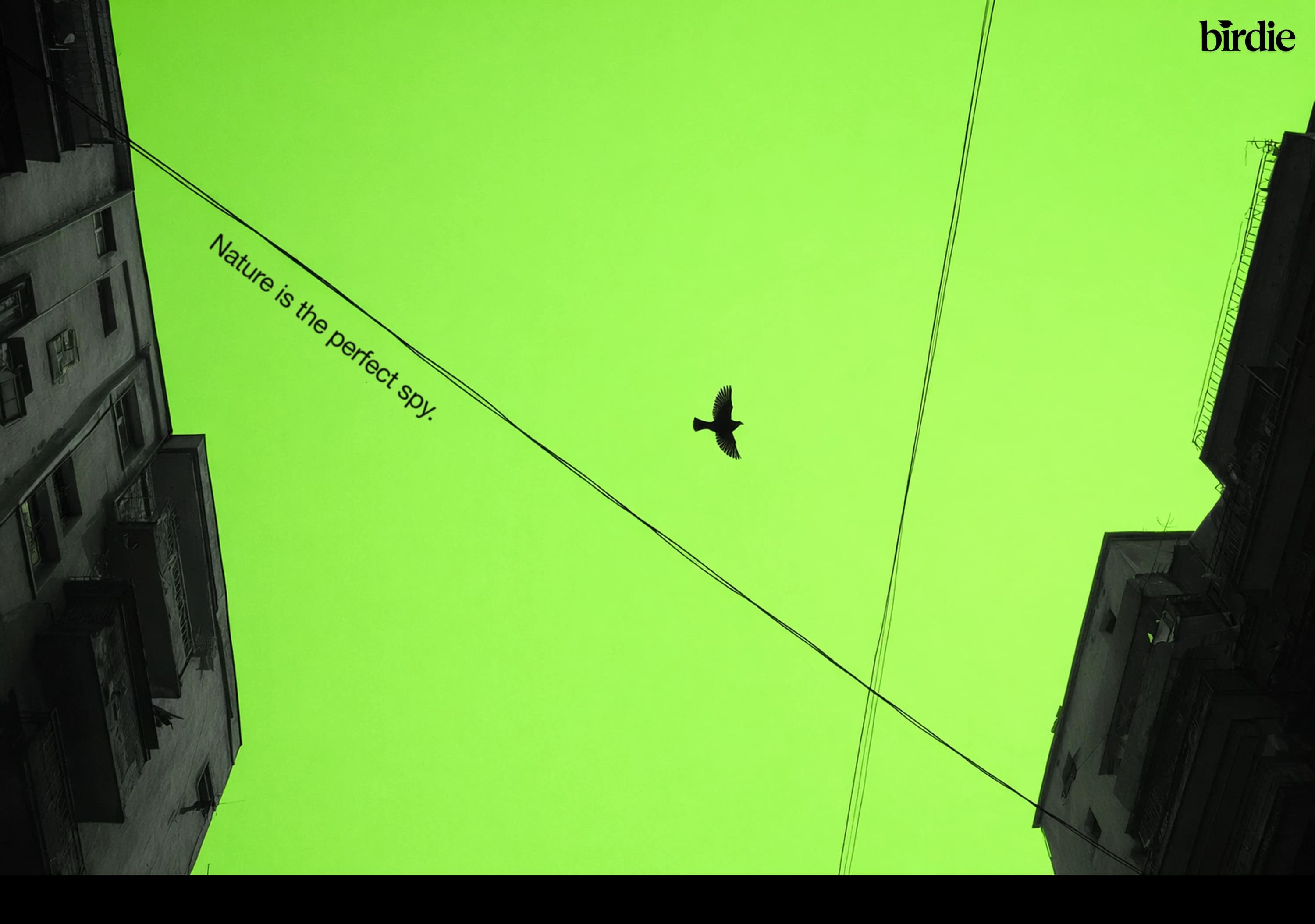
The campaign side of the brand shows how Birdie can communicate with very little. For example, one ad features a single bird silhouette against a vivid green sky, turning the core idea into an immediate statement: Nature is the perfect spy. The composition is minimal, high-contrast, and atmospheric. Overhead wires intersect to form an X, subtly evoking a target and reinforcing themes of surveillance and precision. Together, scale, emptiness, and tension make the concept feel sharp, memorable, and slightly unsettling in the right way.
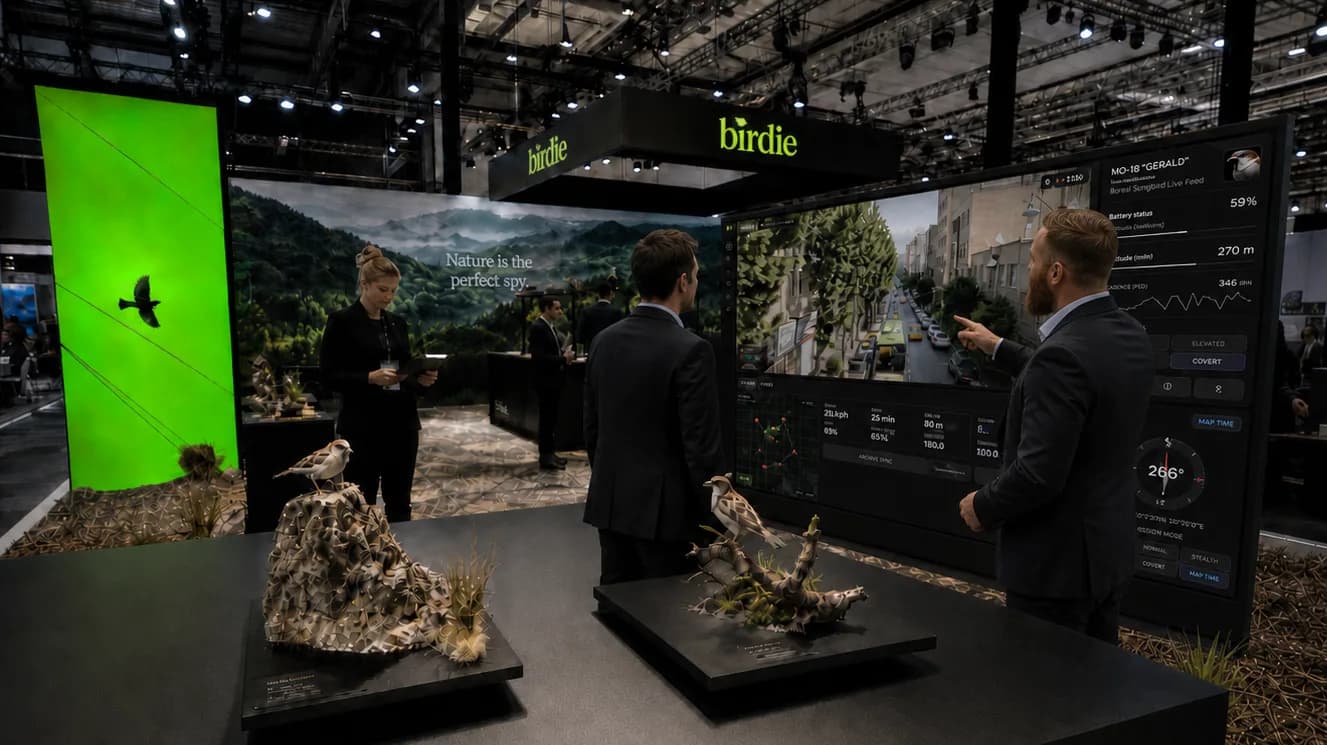
This same visual language was then extended into the physical experience of the brand. Security exhibitions play an important role in how military technologies are introduced, experienced, and sold. At one of the world’s largest international land and air-land defense and security exhibitions, we designed the Birdie booth to bring the brand’s subtle, high-contrast identity into a physical space.
The design kept Birdie’s balance of nature, stealth, and precision, using large bird visuals, live interface screens, and clean architectural elements to make the product feel both advanced and distinctive.
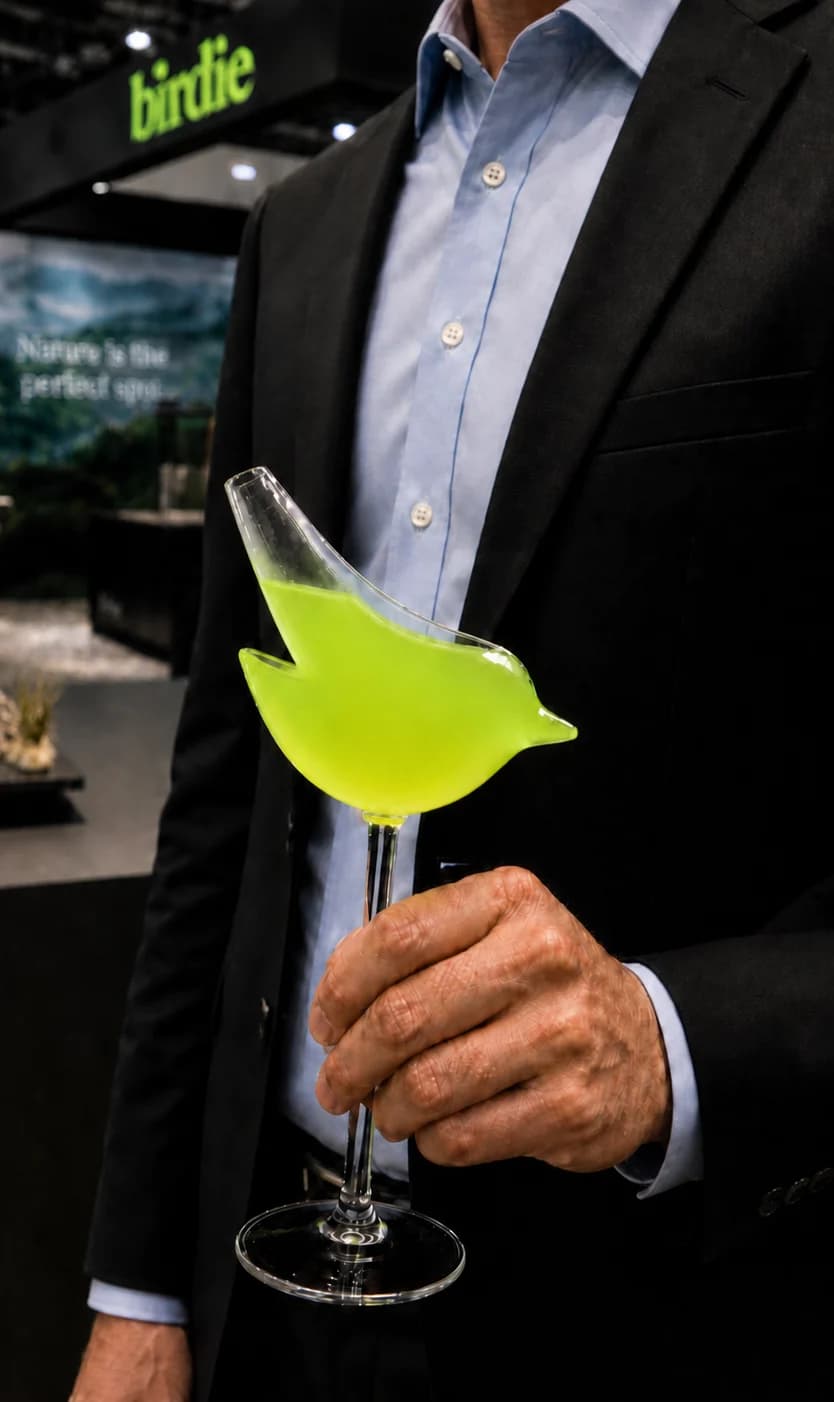
We also added an open bar inside the booth, serving a non-alcoholic “Birdie Cocktail” in a custom branded glass shaped like the logo. As people walked through the exhibition with the drink, the glass became a moving brand asset, carrying Birdie beyond the booth and sparking curiosity across the event.
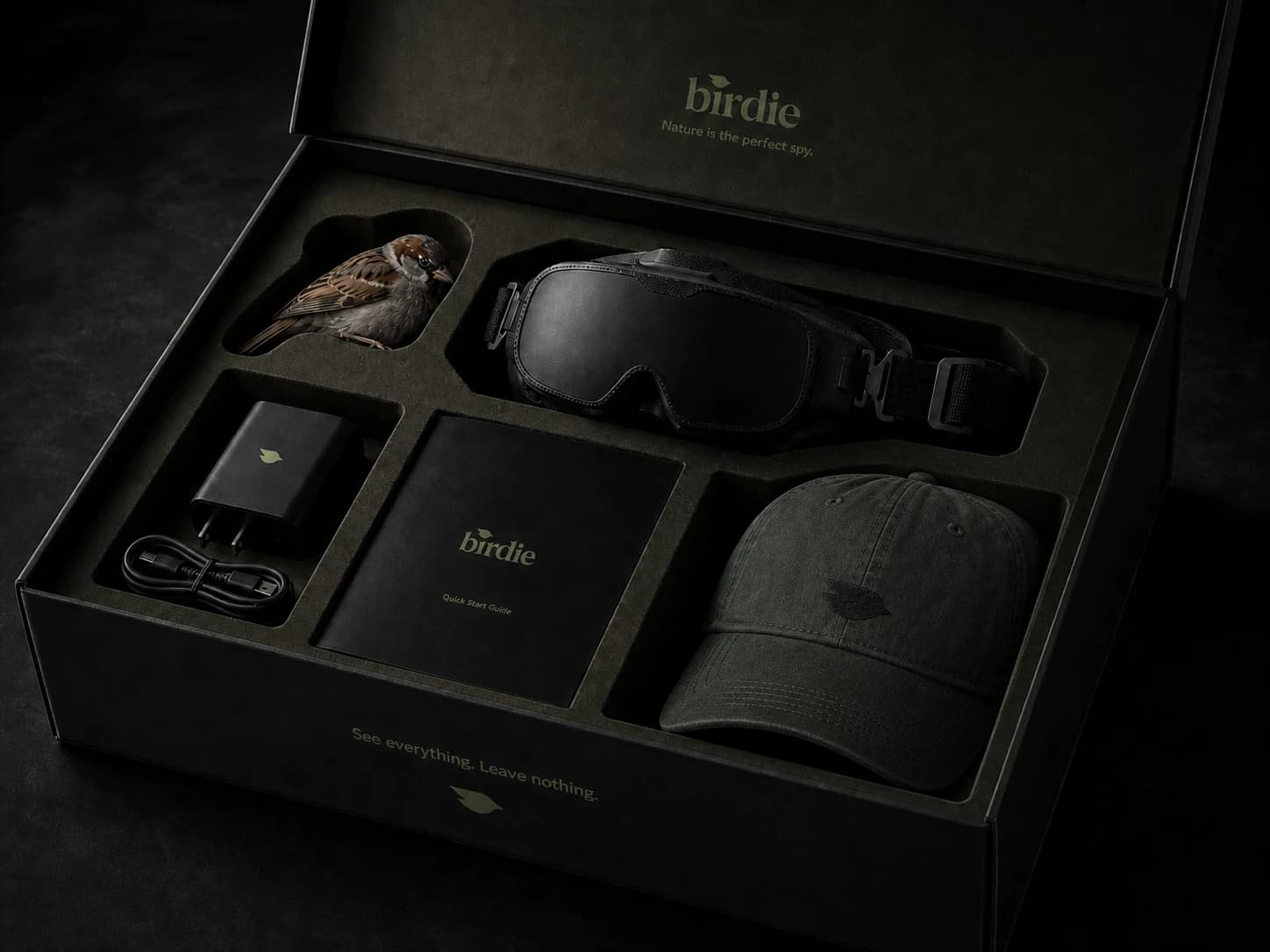
The brand also extends naturally into field-oriented merchandise. As part of the Birdie device kit, each Birdie operator received a branded hat, turning the identity into something practical and connected to real field use. The hat shows how the brand can live in a more grounded and functional format, using minimal branding and muted tones that feel appropriate for soldiers and operational environments.

At the same time, the brand presents Birdie as something cool, sharp, and modern. Its visual language gives the product a stronger cultural presence beyond pure functionality, allowing it to feel not only operational, but also desirable and recognizable.
Together, these examples show the flexibility of the Birdie identity. It can live as a bold campaign image, a practical field object, or a subtle mark on apparel, while still feeling connected to the same world. Across these formats, Birdie stays defined by nature, stealth, precision, and a quiet sense of control.
Product Design
The Birdie interface was designed for the physical control device used by the Birdie operator, functioning as a mission control hub for managing the surveillance asset. Operators interact with the system through this device to monitor the bird’s camera feed, adjust flight behavior, and coordinate surveillance missions. The experience needed to support both immediate operational control and broader mission planning.
Three primary views structure the interface.
The first focuses on live surveillance control. The bird’s camera feed occupies the central position on the screen, maintaining continuous visual awareness of the environment. Surrounding the feed are contextual data elements such as altitude, movement speed, signal strength, battery level, camera mode, and autonomous flight status. Operators can also trigger key operational actions directly from this view, allowing them to adjust behavior, respond to changing conditions, and maintain control without losing focus on the live scene.
The second focuses on missions view and intelligence analysis. To support different operational needs, the system includes grid view, map view, and list view. Grid view is designed for rapid visual scanning, allowing operators to compare multiple missions at once through imagery, severity, and status. Map view adds spatial context, helping teams understand where missions took place, how they relate geographically, and where attention should be focused across a wider area. List view supports more structured review, making it easier to sort, filter, and scan mission metadata such as location, risk score, activity state, and timestamps.
The third is a dedicated mission detail view for deeper investigation and coordination. In this screen, operators can open a specific mission to review its full details, examine the surveillance content captured by the bird, and analyze key findings in context. The interface brings together mission history, associated people, observations, flagged points of interest, and supporting intelligence, creating a shared environment where operators and intelligence teams can review, interpret, and manage the mission together.
Across all screens, the design prioritizes clarity and control. Information is revealed progressively, so operators can focus on the most relevant signals at each stage of the mission without being distracted by unnecessary complexity. This helps the system support fast understanding in the moment while still giving access to deeper operational detail when needed.
Conclusion
Birdie was an opportunity to design a military surveillance platform and explore how its visual language could feel cool, modern, bold, and precise while supporting complex operational needs.
The project brought together brand identity, product interface, and narrative into a unified intelligence system. The brand communicates stealth, intelligence, and quiet confidence, while the interface prioritizes clarity and situational awareness in demanding environments.
Designing the brand and the product together made it possible to create a consistent system where typography, color, layout, and interaction patterns all reinforce the same core principles. The result is a platform that feels technologically advanced yet controlled - a system designed not to dominate the environment, but to integrate into it.
Quiet, precise, and always observing.
Just like a bird.