
BarTov
Design & Creative
- Overview
- Challenge
- Design Approach
- Brand Design
- Conclusion

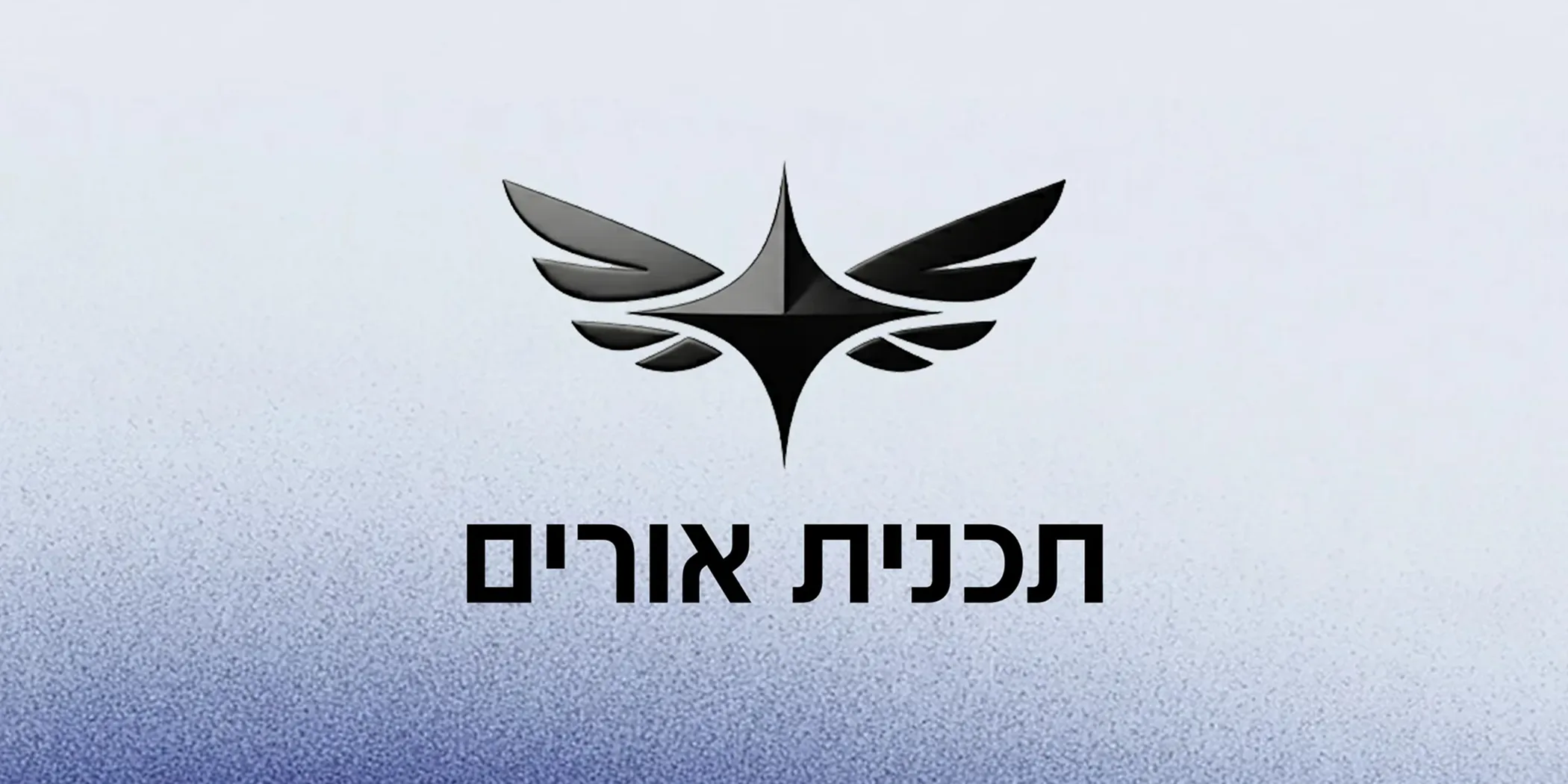
Urim - AI leadership program for the IDF
Disclaimer: This concept is part of an independent research and branding exploration. The Urim program is a fictional framework developed to examine how a next-generation elite AI defense program could be positioned, structured, and visually represented. It is not an officially implemented program, but a conceptual study in strategy, identity, and design.
Overview
Inspired by the legacy of programs such as Talpiot, Urim imagines a new academic-military model built around AI research, strategy, and long-term technological leadership. Participants begin with an intensive training track that combines military preparation with B.Sc. and M.Sc. studies at the Hebrew University of Jerusalem, focusing on mathematics, computer science, machine learning, and systems engineering.
Participants continue into a long-term service path within elite technological units, where they contribute to advanced research and operational development. Their academic journey continues in parallel, eventually extending to doctoral work in Israel and a postdoctoral stage at Yale University.
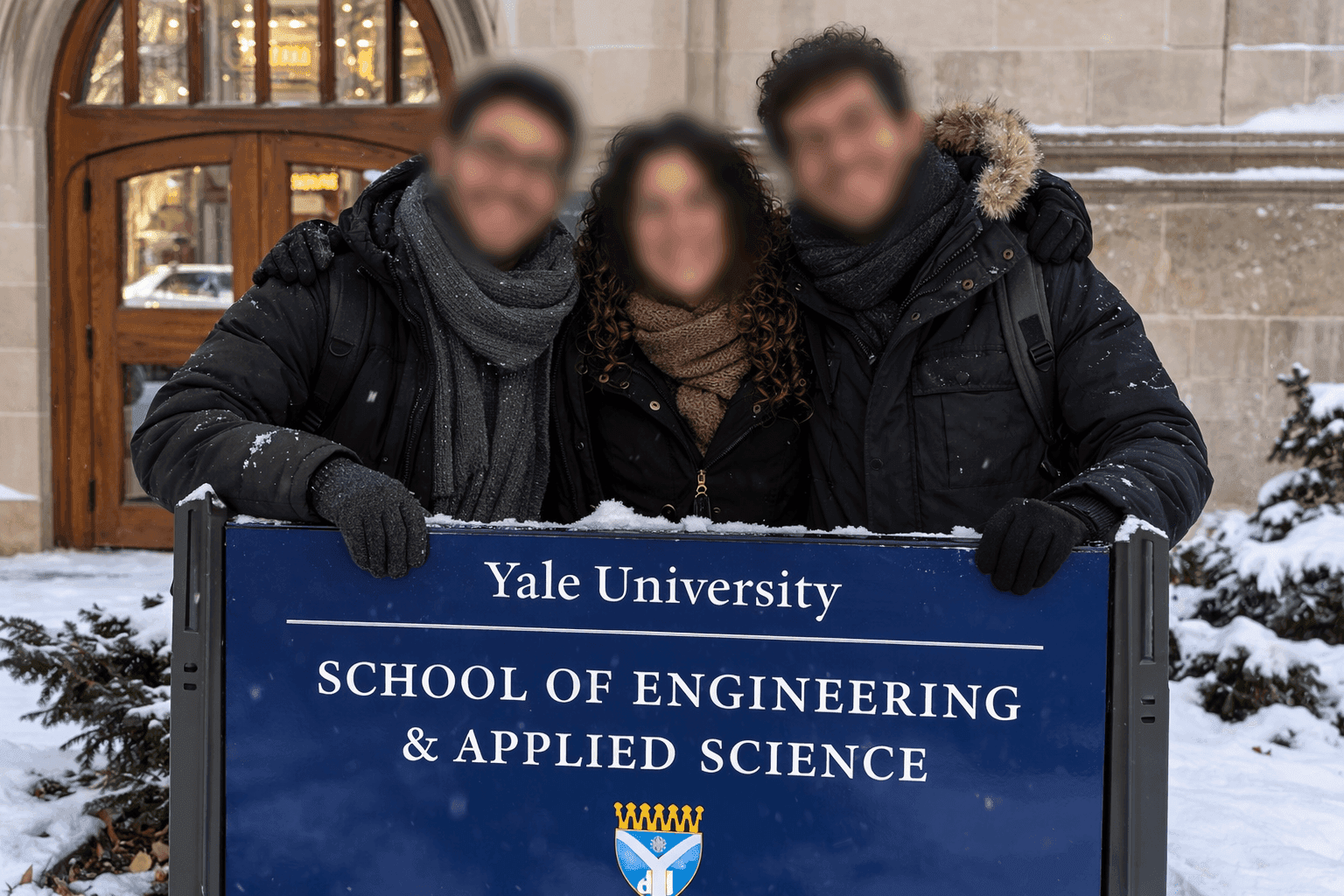
The purpose of the concept is not only to imagine a training program for engineers, but to explore how a new generation of AI leaders could be developed - people capable of shaping national security, technological strategy, and the responsible use of artificial intelligence.
From a design perspective, the project asked how such a program should be positioned, visualized, and symbolized. The goal was to create an identity that feels prestigious, intellectual, and future-facing, while remaining deeply connected to the values of Israeli defense excellence.
Challenge
There is no IDF program built specifically around long-term AI leadership. That absence created the core design challenge: to imagine a program that does not yet exist, but feels credible enough that it could.
The identity had to introduce a new category inside a world already shaped by strong institutional symbols, elite military programs, and established ideas of excellence. It needed to feel prestigious and official, while also expressing something more research-driven, future-facing, and intellectually rigorous.
The challenge was not only to design a logo or visual language, but to build a complete narrative system - one that could represent AI leadership through symbolism, tone, and structure. The result had to balance four tensions at once.
Vision
A future-facing program built around long-term AI leadership.
Innovation
A new institutional model shaped by research, technology, and strategic thinking.
Official
Designed to feel credible, disciplined, and rooted in elite defense culture.
Engaging
Distinctive and memorable enough to inspire ambition and attract exceptional talent.
Design Approach
The project was approached as a strategic identity exercise rather than a purely visual one. Before designing symbols, colors, or materials, I focused on defining the conceptual foundations of the program: what it stands for, what makes it different, and what emotional and cultural space it should occupy.
Three principles guided the work:
01
Prestige with Purpose
The identity needed to feel elite, but not ornamental. It had to communicate intellectual rigor, responsibility, and national significance rather than empty exclusivity.
02
Future with Tradition
Because the program envisions the future of defense and AI, the visual language needed to feel forward-looking while remaining rooted in the symbolism and institutional weight of elite Israeli military programs.
03
Clarity within Complexity
AI is often represented through abstract or overly technical visuals. I wanted the identity to feel intelligent and layered while translating complexity into something symbolic, clear, and memorable.
Brand Design
Elite IDF Programs Landscape
For decades, the IDF has developed exceptional talent through elite academic-military programs (Atuda) such as Talpiot, Psagot, Havatzalot, Arazim, Brakim, Reamim, Alonim, Gvishim, and more.
The visual world surrounding elite military and defense programs is typically built on a familiar language of insignias, metallic symbols, dark tones, wings, stars, and institutional emblems. These systems are designed to communicate excellence, hierarchy, discipline, and national responsibility.







At the same time, the visual language around artificial intelligence often moves in a very different direction - abstract gradients, network patterns, digital effects, and futuristic technology clichés. While these references communicate innovation, they often lack the gravity and symbolic discipline required for a defense-related program.
Urim needed to exist between these two worlds. The challenge was to create a visual identity that could sit naturally alongside established elite IDF programs while also signaling a new era shaped by AI, research, and strategic intelligence. It needed to feel official enough to be credible, but distinct enough to introduce a new category.
The Name
The name Urim was designed to carry multiple layers of meaning at once - historical, academic, technological, and emotional. Rather than functioning as a purely symbolic or institutional name, it creates a broader conceptual foundation for the program and gives the identity depth from the very beginning.

Ancient Guidance
Drawn from Urim and Thummim, ancient symbols associated with guidance, truth, and difficult decisions under uncertainty. This gives the concept a strong symbolic foundation from the start.
Academic Inquiry
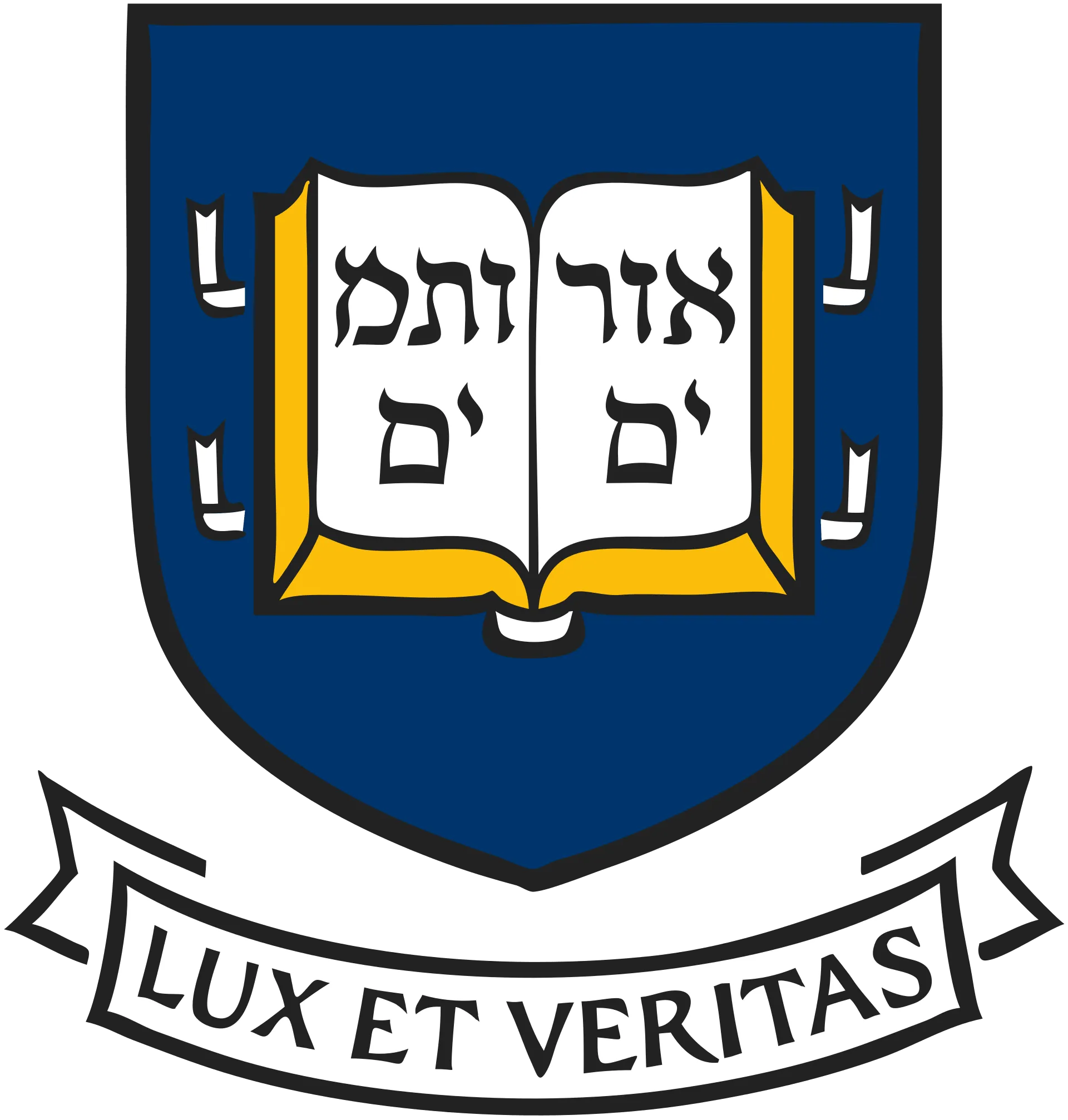
Connected to Yale University, the program’s academic partner, where Urim and Thummim appears on the university seal. This reinforces the concept’s research ambition and its bridge between ancient symbolism and advanced inquiry.

Human Partnership
Embedded in the word itself, where UR echoes “you are” and IM echoes “I am.” This suggests intelligence as a partnership between human judgment and machine capability.

October 7
Urim also carries contemporary Israeli resonance through its connection to Urim base and the events of October 7. This gives the concept added emotional gravity, tying it not only to excellence and innovation, but also to memory, resilience, and responsibility.
The Logo
The logo and wider visual system build on sharp structure, symmetry, and conceptual clarity, translating the meaning of the name into a mark that feels both prestigious and forward- looking.
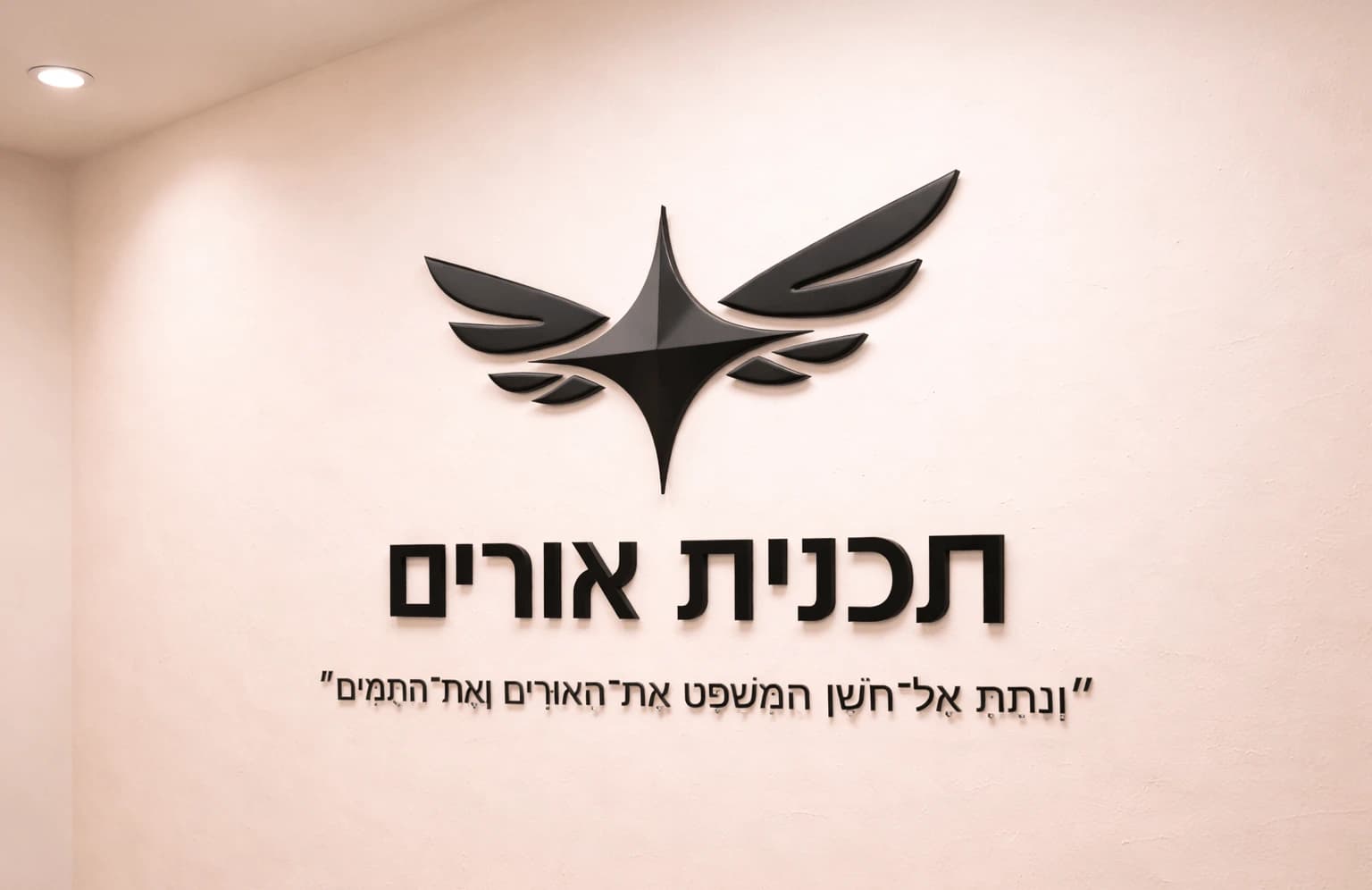
At the center of the logo stands a sharp four-pointed spark. The spark was chosen deliberately because it is one of the most recognizable visual symbols associated with artificial intelligence today. It creates an immediate connection to the world of AI, so even at first glance the mark signals that the program belongs to a new generation of technological and research-driven excellence.
The spark is supported by structured, symmetrical wings, placing Urim within the visual lineage of Israel’s elite programs. The wings were designed to feel precise and elevated rather than decorative, giving the emblem a sense of discipline, ascent, and institutional weight. Their sharp, layered construction helps balance the futuristic quality of the spark with the seriousness and prestige expected from a top military-academic program.
Colors
The color palette was designed as a visual metaphor for the role of artificial intelligence. It transitions from deep navy to light gray, moving from darkness toward clarity.
Uncertainty, unanswered
questions, complexity
Understanding, insight,
technological mastery
blue-900
#0D1B3E
blue-700
#2D4070
blue-400
#8A9AB8
blue-100
#EAEDF5
white
#FFFFFF
This progression reflects the core promise of AI: transforming complexity into actionable clarity. It also reinforces the deeper meaning behind the name Urim, which is associated with illumination and guidance.
Overall, the palette was meant to feel restrained, prestigious, and precise - closer to institutional excellence than to flashy tech aesthetics.
Brand Activation
Because Urim is a military program, the brand does not need advertising campaigns or heavy public-facing branding. Its use is naturally more limited and institutional, and it cannot drift too far from the visual conventions of other elite IDF programs. The challenge was therefore not to create a loud or highly flexible brand system, but to design something distinguished enough to feel new while still credible within that formal context.
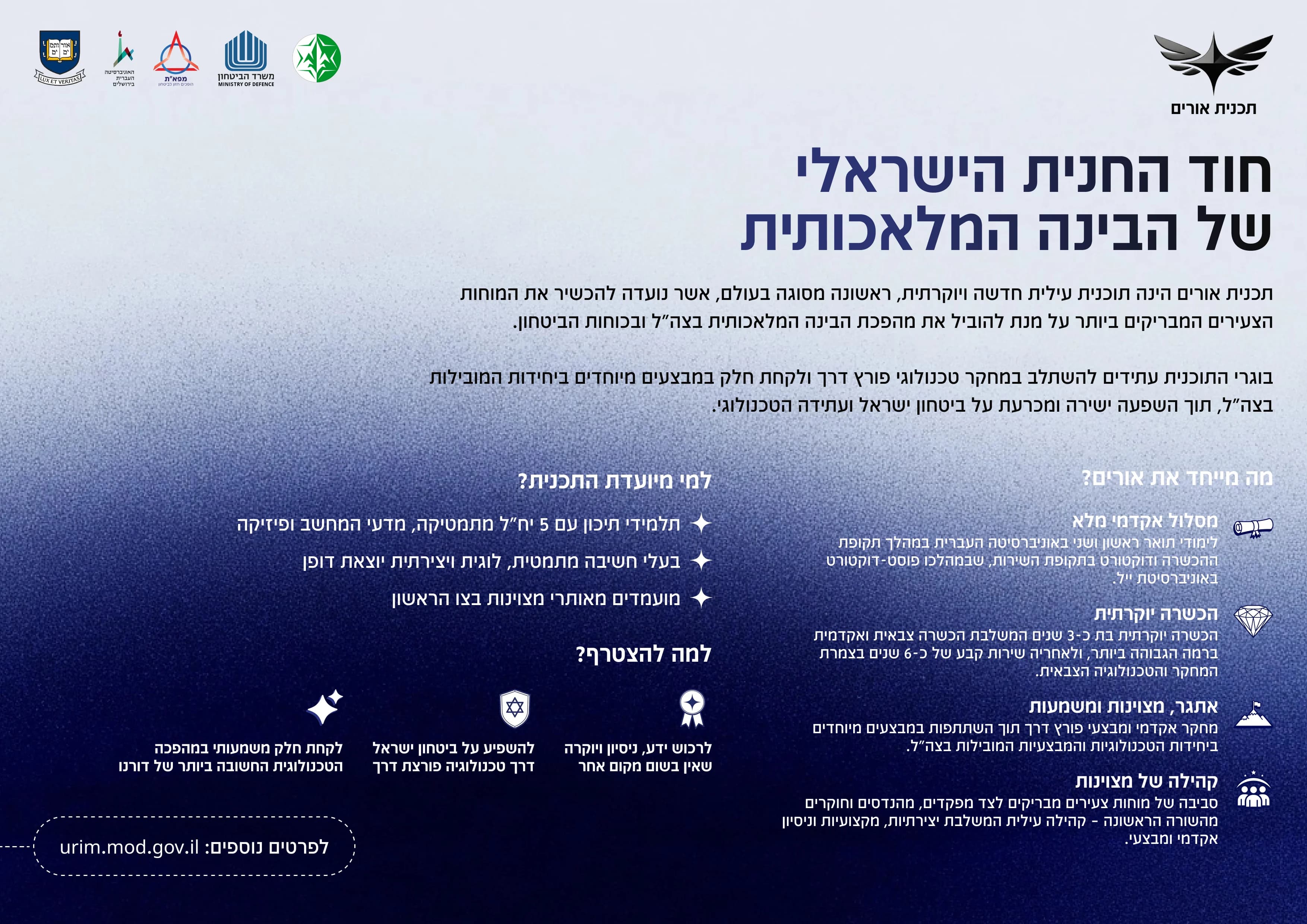
The brand was applied in two main ways. The first was through official program materials, such as informational flyers and recruitment assets. In these applications, the identity comes through not only in the logo, but also in the broader visual language: structured layouts, sharp typography, the blue gradient field, and a supporting icon system that helps explain the program in a clear and prestigious way. This allowed the concept to feel institutional and informative, while still carrying a more refined and future-oriented character.
The second application was a graduation pin. Like other IDF programs, Urim graduates receive a pin worn on the uniform as a formal mark of completion, so the identity needed to work as a small physical object.
I adapted the logo into a dimensional metal pin, translating the flat mark into layered silver wings and a raised four-point spark at the center. The spark was colored with Urim’s gradient palette, bringing the program’s visual language into the physical object while adding depth, contrast, and a more official material quality. The result preserves the core character of the Urim logo while giving it the clarity, weight, and ceremonial presence expected from a graduation pin.

Conclusion
Urim was an exploration of how a new kind of elite defense program could be imagined through strategy, symbolism, and design.
The project was not about branding an existing institution, but about asking what kind of identity could represent the next chapter of technological leadership in Israel’s defense ecosystem - one centered not only on military excellence, but on artificial intelligence, research, and long-term strategic responsibility.
The concept combines references from biblical tradition, academic ambition, military symbolism, October 7, and contemporary technological thinking. It creates a brand that feels both visionary and grounded, presenting AI not as a cold or abstract system, but as a disciplined force for insight, leadership, and national resilience.
The result is a conceptual identity that aims to feel credible, prestigious, and deeply intentional - a brand built for a future in which intelligence is not only gathered, but shaped.