BarTov
Design & Creative
- Overview
- Challenge
- Design Approach
- Brand Design
- Product
- Recognitions
- Conclusion

Prof. Ayana Rivers - Founder Branding for vibeRNA
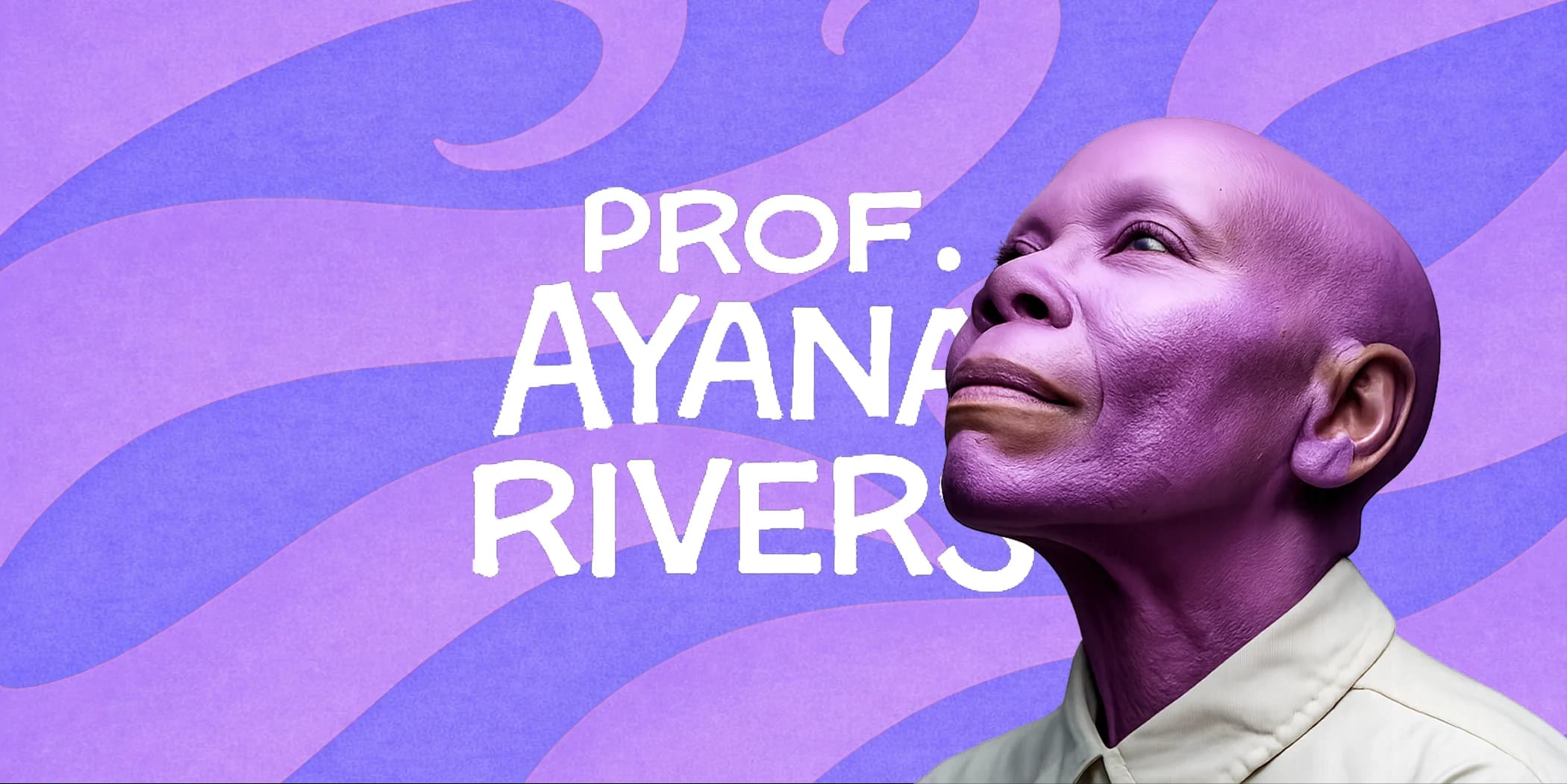
Disclaimer: This person does not exist.
Overview
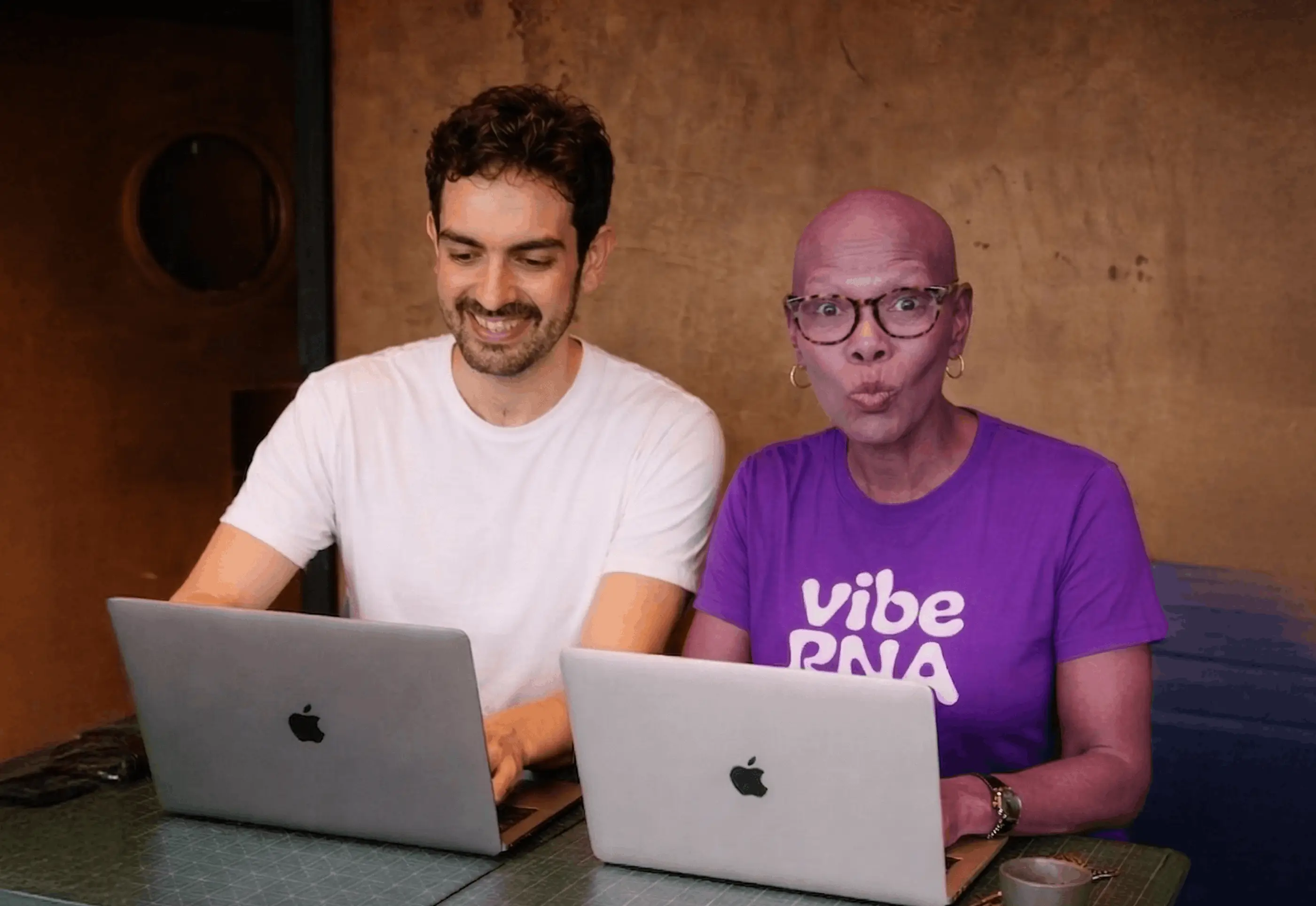
Over the past two years, I had the privilege of joining Prof. Ayana Rivers while she was building one of the most important companies of our generation: vibeRNA. My role was to shape her founder brand - building the visual and narrative system around her public presence, managing how she appeared online and in the media, and helping translate a highly advanced scientific vision into something people could connect with, trust, and admire.
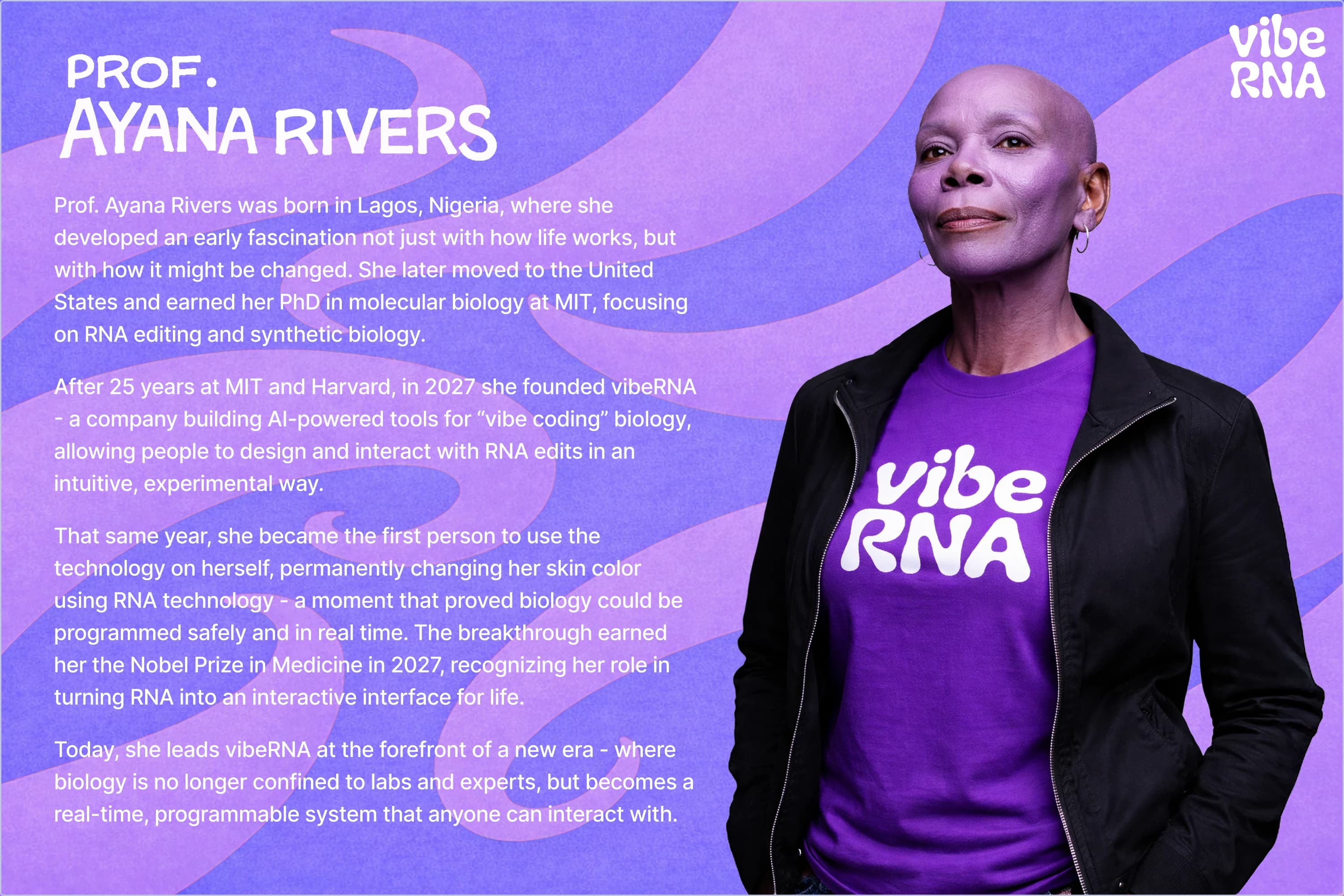
Ayana is not only the founder and CEO of vibeRNA, but also the first person to publicly use the technology on herself - changing her skin tone to purple through RNA expression and turning a scientific breakthrough into a cultural moment. That act made her impossible to ignore, but it also meant her public image had to do more than look polished. It had to carry the weight of a new category, a new technology, and a new era in biology.
Challenge
Ayana is an extraordinary founder leading an extraordinary company. She has a groundbreaking product, a brilliant team, and a vision that could fundamentally change how people interact with biology. But that same ambition created the challenge.
vibeRNA is a powerful and deeply disruptive idea. A platform that lets people edit RNA across plants, animals, and humans can sound exciting, but it can also sound intimidating, controversial, or even frightening. When a technology is this advanced, people do not only evaluate the product - they evaluate the person behind it.
That made founder branding essential. The challenge was to present Ayana not just as a brilliant scientist, but as a leader people could trust: approachable enough to connect with, strong enough to lead a category, and charismatic enough to make the future feel desirable rather than threatening. Her public presence needed to make people feel that if she was the one building vibeRNA, then maybe this future was something worth believing in.
Design Approach
I approached the project through the lens of founder branding: the practice of intentionally shaping how a founder appears in public so that their personality, credibility, and worldview become part of the company’s value. This matters more than ever today. Products now spread through media, social platforms, interviews, and public attention. As a result, people increasingly trust companies through the people who lead them. A founder is no longer only an executive - they are also a narrative system.
From there, three principles guided the work:
01
Authority with
Warmth
Ayana had to feel world-class and visionary without becoming cold or unreachable, balancing scientific excellence with human presence.
02
Future made
Personal
vibeRNA is a massive idea, so the founder brand had to use Ayana’s voice, style, humor, and story to make the technology clearer and easier to connect with.
03
Cultural
Presence
Ayana needed to feel accomplished, visible, and compelling - someone who belonged on stages, in interviews, and in public imagination.
Brand Design
Founders Landscape
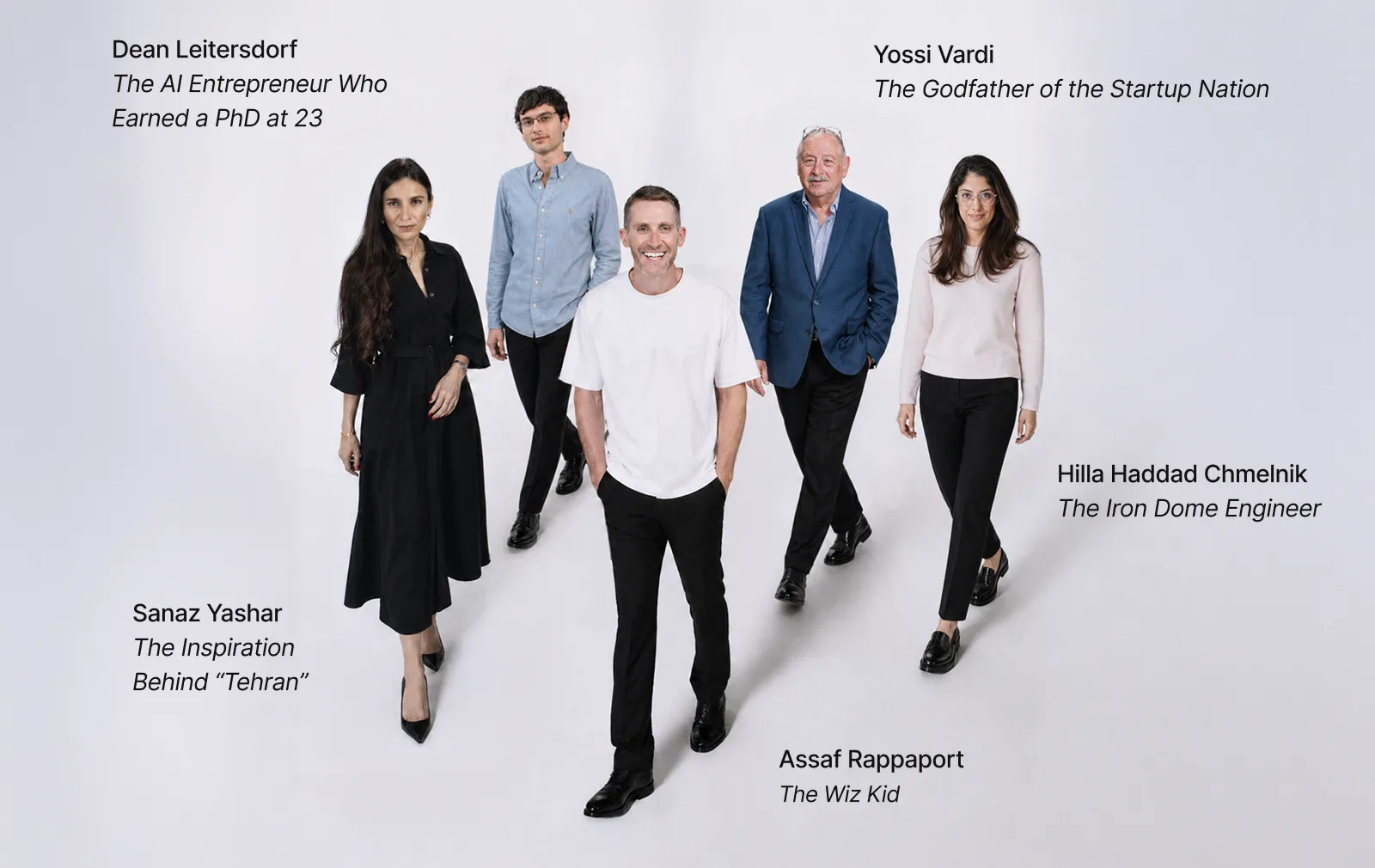
I started wondering what founder branding actually looks like in practice - so I decided to explore it through the Israeli tech landscape. Israel has no shortage of brilliant founders, but what caught my attention wasn’t just what they built - it was how they present themselves to the world. Some project sharp technical authority, others lean into storytelling or cultural relevance, and a few manage to blend both into something instantly recognizable.
Looking at them side by side, it becomes clear: the most memorable founders aren’t just operators - they’re symbols. They craft identities that travel beyond their companies, shaping how entire industries are perceived.
The Logo
The logo was designed to feel bold, expressive, and unmistakably personal. Its letterforms are irregular, hand-drawn, and slightly raw, giving the identity a stronger human presence than a polished corporate logo would. That choice makes the mark feel more like a signature or declaration - something rooted in personality, conviction, and voice.
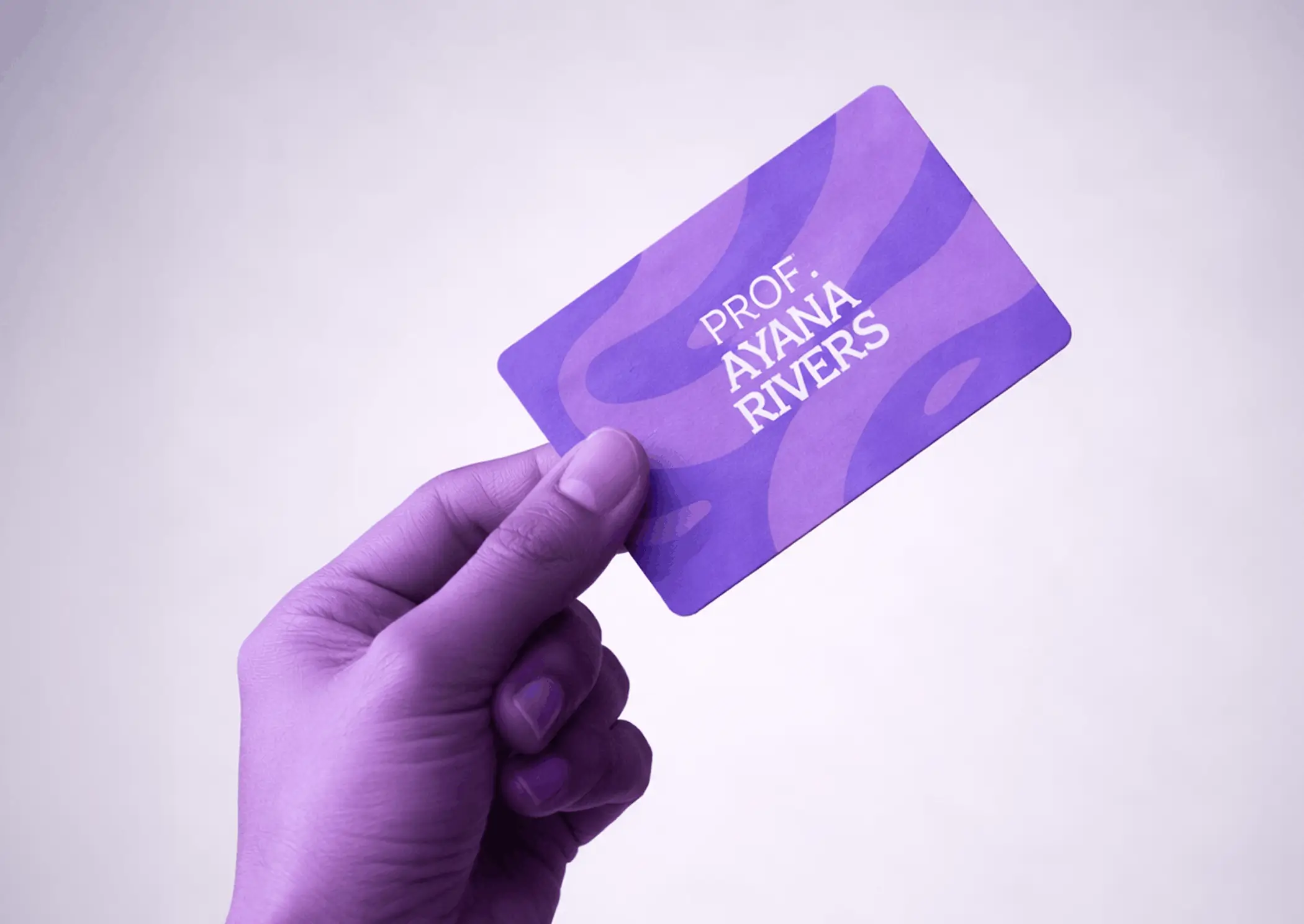
The style also carries a subtle cultural warmth that feels relevant to Ayana’s story. The shapes have an organic, rhythmic quality that can evoke a broader sense of African visual expression, which felt meaningful given that she was born in Nigeria. Together, these qualities make the logo feel less like a biotech label and more like a founder identity - confident, distinctive, and deeply tied to the person behind the company.
Colors
The color system centers around vivid purple, supported by lighter lavender tones, soft gradients, and bright neutral backdrops. Purple became the defining color not only because of its energy and memorability, but because it directly connects to Ayana’s most iconic moment: permanently changing her skin tone to purple.
purple-500
#8E7AFA
purple-300
#C192F9
neutral-50
#EEEDEB
white
#FFFFFF
That gave the palette unusual power. It was no longer just aesthetic - it became symbolic. Across the brand, purple signals experimentation, self-transformation, and a future that feels strange, but unbelievably exciting.
Brand Activation & Creative Strategy
One of the foundational visual elements in the system was the recurring pattern language. Flowing organic shapes appear throughout the identity, abstractly echoing the form of an octopus, which became the mascot of vibeRNA. These patterns gave the brand a more biological, fluid, and slightly surreal quality, helping it feel less mechanical and more alive.

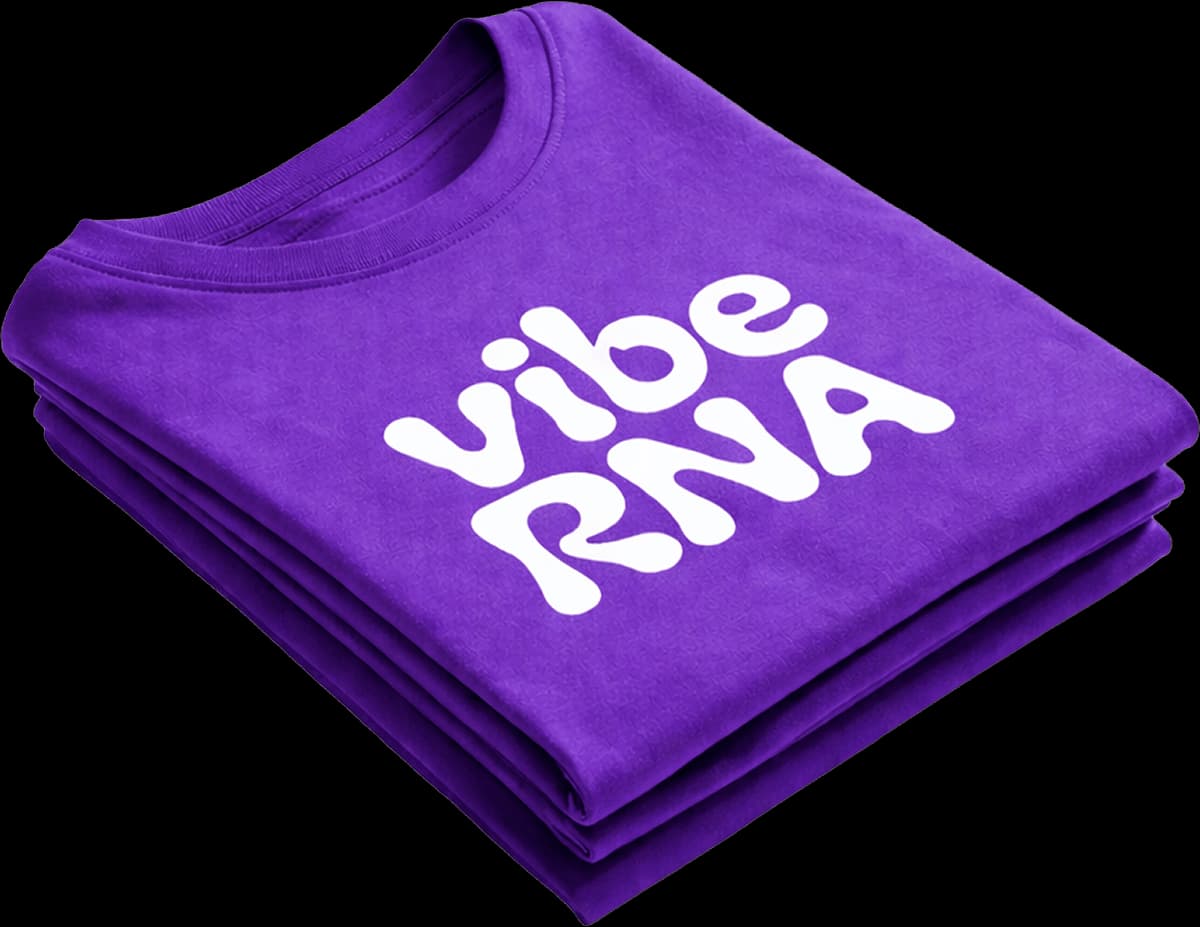
We also agreed with Ayana that purple would become a consistent part of her personal wardrobe. Not as a full look, but as a recurring signature through shirts, sweaters, and other pieces that would make her instantly recognizable and more closely connected to the vibeRNA brand. That is why she is often seen wearing a vibeRNA shirt or a purple top - it became a simple but effective part of the founder brand.
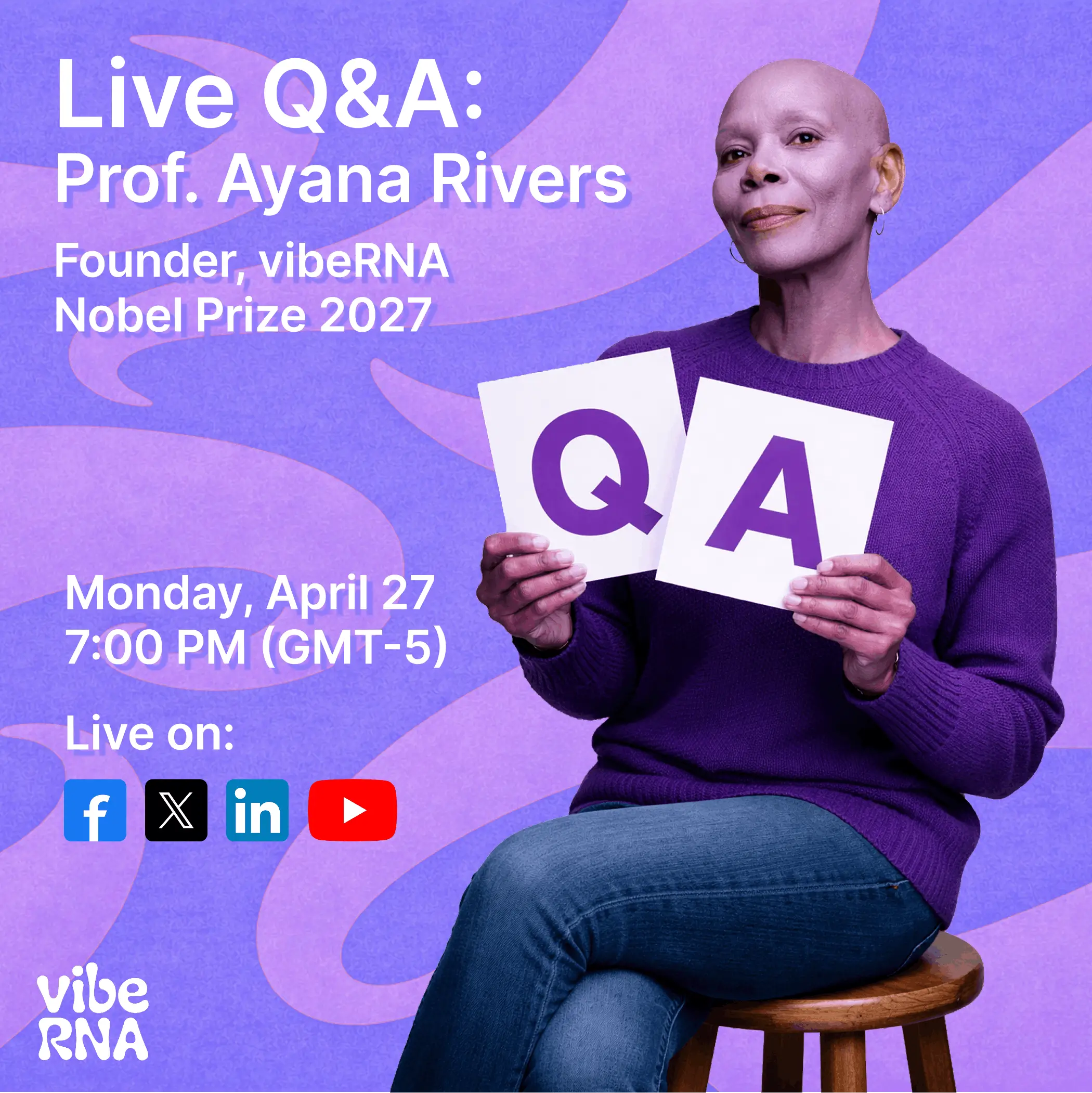
We also extended the founder brand into public sessions and media appearances. For example, the Q&A event positioned Ayana as both expert and personality, creating a more conversational space for people to engage with her ideas. This helped carry her voice beyond formal announcements and gave the brand a softer, more interactive layer.
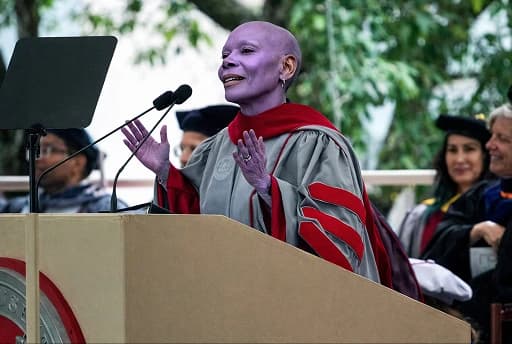
A large part of the work involved shaping Ayana’s public presence through appearances that made her feel both prestigious and approachable. One of the most important was her speech at the MIT graduation ceremony, where she spoke to new graduates about building futures that do not yet have a category, and about having the courage to work on ideas that may feel too early, too strange, or too ambitious until the world catches up. It was a defining moment in positioning her not only as a founder, but as a voice people would look to for direction.
We also built Ayana’s public presence through a range of media appearances that allowed different sides of her personality to come through. Late-night interviews and lighter public formats gave space to her humor and charisma, while more serious interviews positioned her as a leader capable of carrying the ethical and scientific weight of the technology. Founder branding worked best when both sides were visible - not just the genius behind the product, but the person people would actually want to listen to.
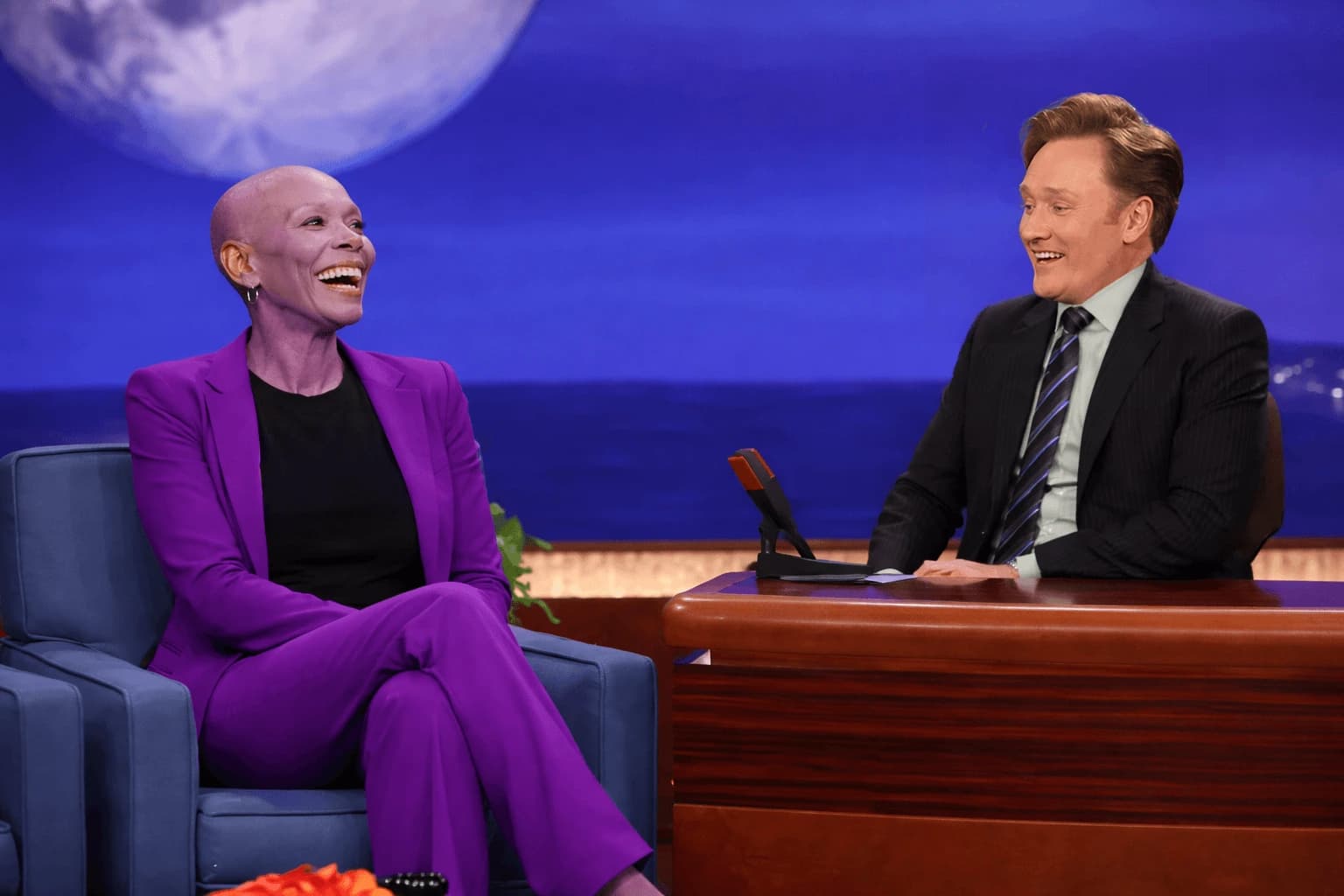
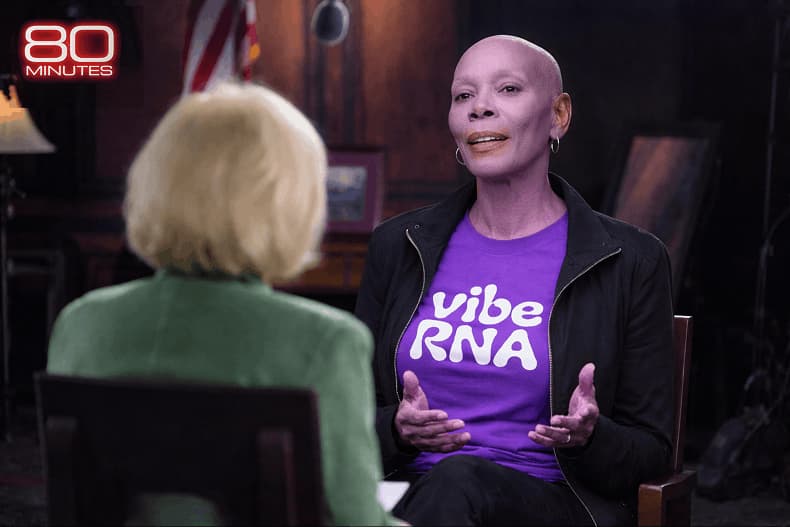

For the past two years, I followed Ayana closely almost everywhere she went and was responsible for shaping and uploading her presence across social media. Rather than treating each appearance as an isolated post, I documented her journey as part of a larger visual world - one that connected her real presence with vibeRNA campaigns, brand visuals, and the broader symbols of the company.
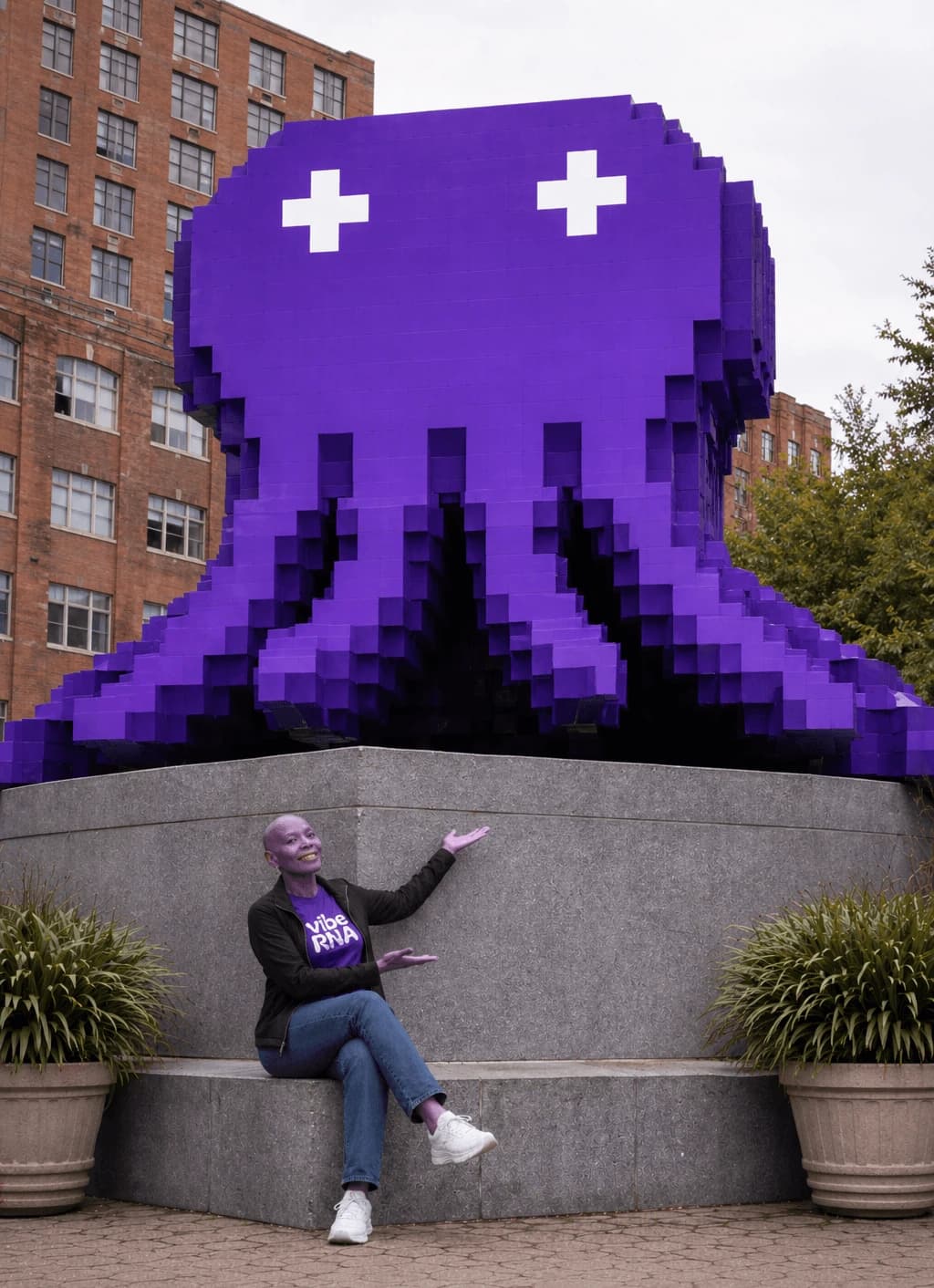
One day I had a simple thought: why not place a huge pixelated octopus - the brand mascot - in the middle of New York City? After two months of design work, production, and city permissions, the idea became real. The sculpture became a highly recognizable public landmark and a trending place for people to visit and photograph.
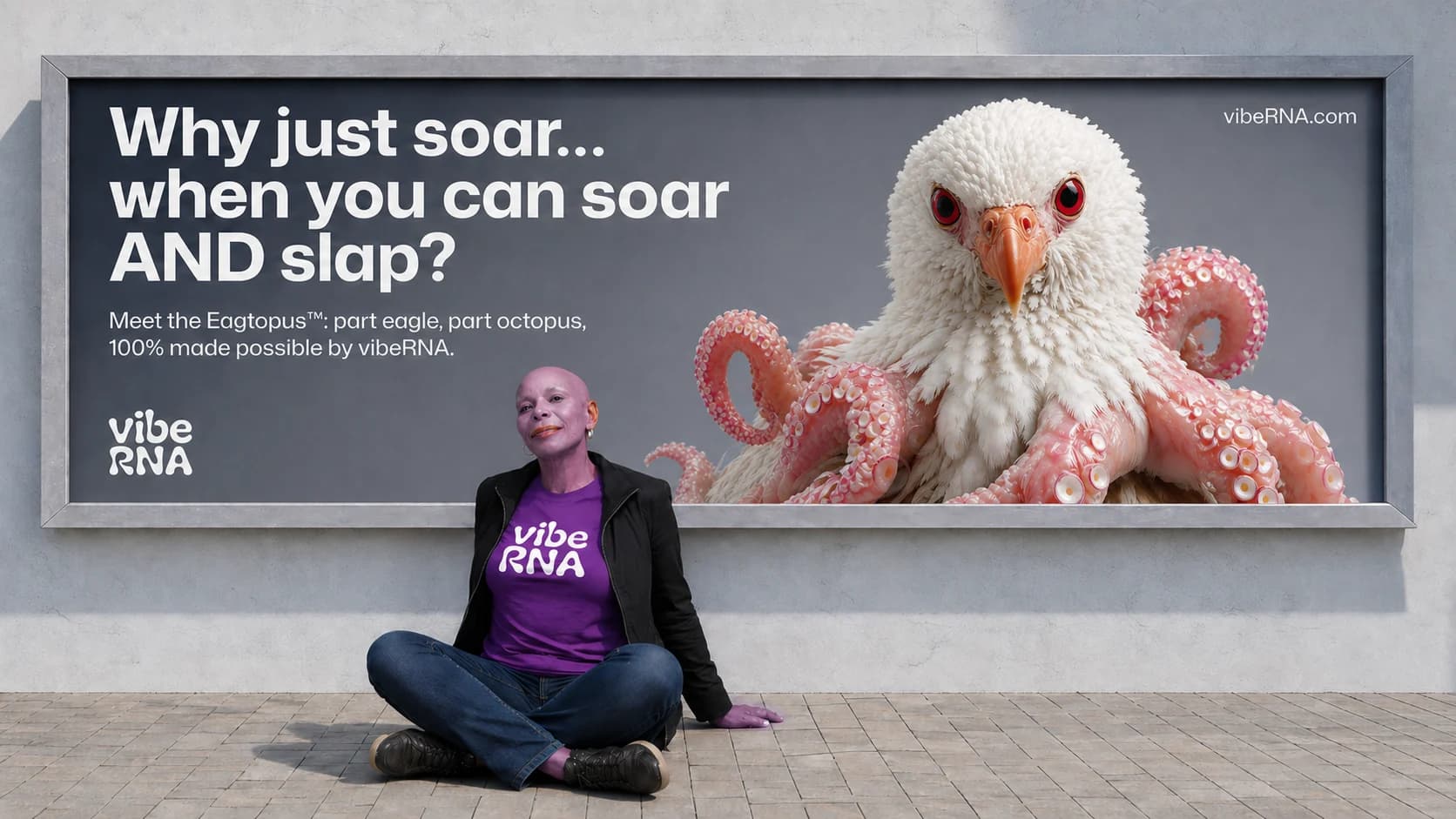
Another campaign explored the idea of engineered animal hybrids - imagined creatures made possible through vibeRNA’s technology. The campaign takes the product vision to an exaggerated yet still relevant extreme, turning a complex scientific idea into something instantly attention-grabbing. It was intentionally provocative, but the humor made it feel more playful than threatening, which helped it spread widely. The result was a strong boost in brand visibility: people were talking about it, sharing it, and engaging with vibeRNA in a way that felt cultural rather than purely scientific.
It is important to note that vibeRNA is firmly against animal testing. The campaign was intended to be humorous while demonstrating the imaginative possibilities of what vibeRNA could do. In practice, any animal editing would only be permitted under strict regulation and with specific approval from the relevant health authorities.
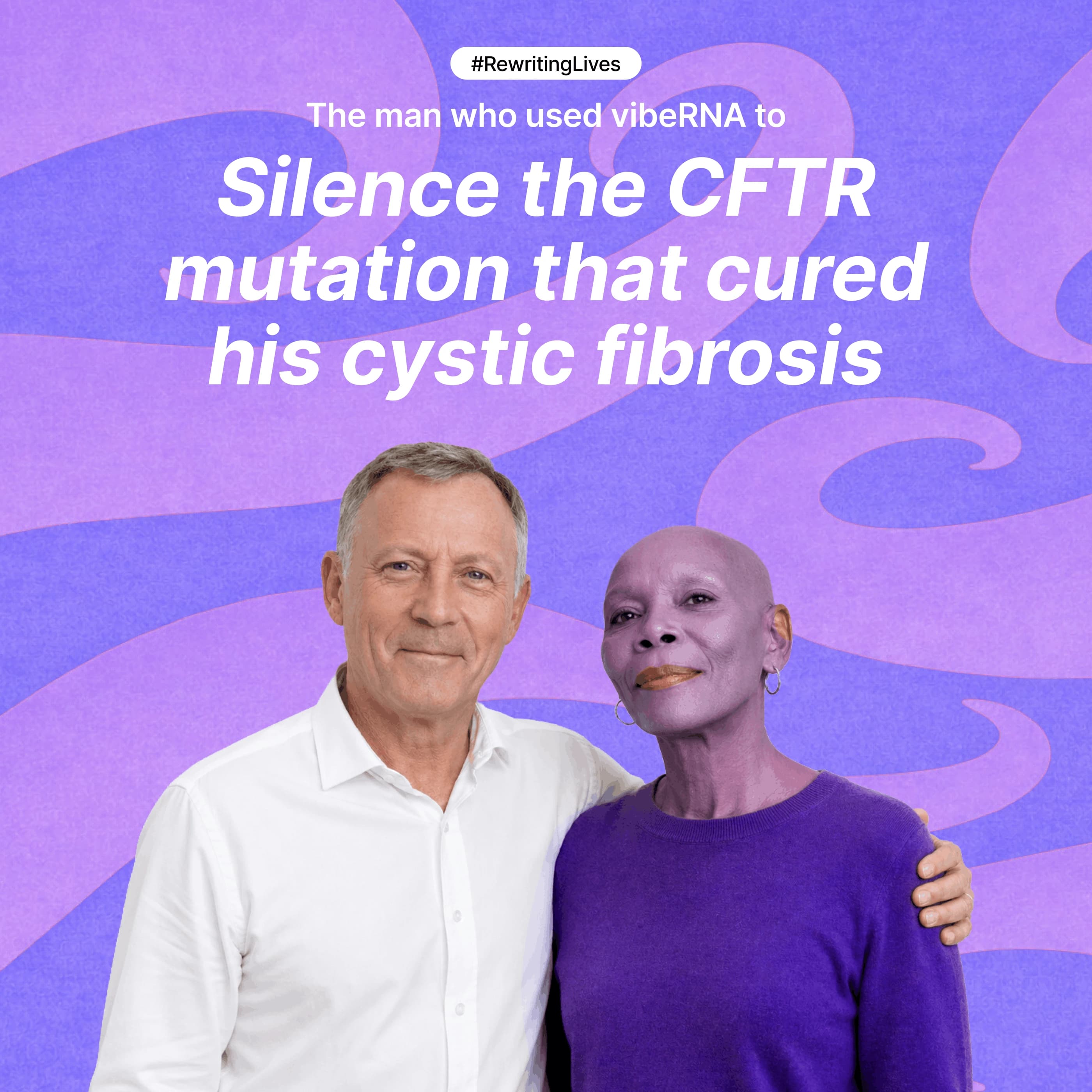
Because vibeRNA touches something as personal as the body and biology, public trust could not be built through campaigns alone. A big part of the work was meeting directly with consumers and listening to their stories, reactions, and hopes around the product. These conversations helped make the brand feel more human and responsive, grounding a highly futuristic technology in real people, real emotions, and real questions.
Product
The vibeRNA product deserves its own dedicated case study, because designing a platform that lets people interact with RNA at this scale involves a complex and extensive product design process.
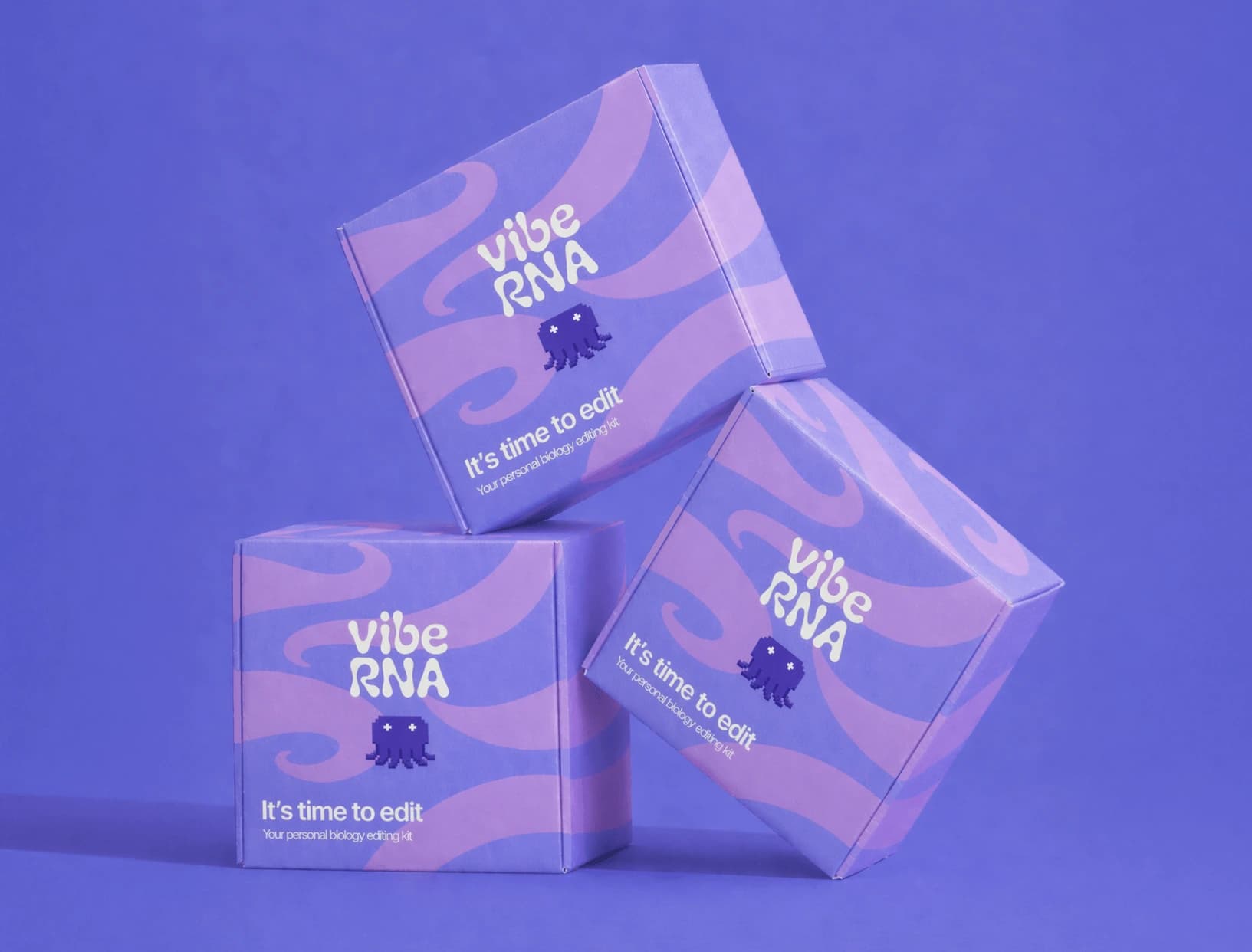
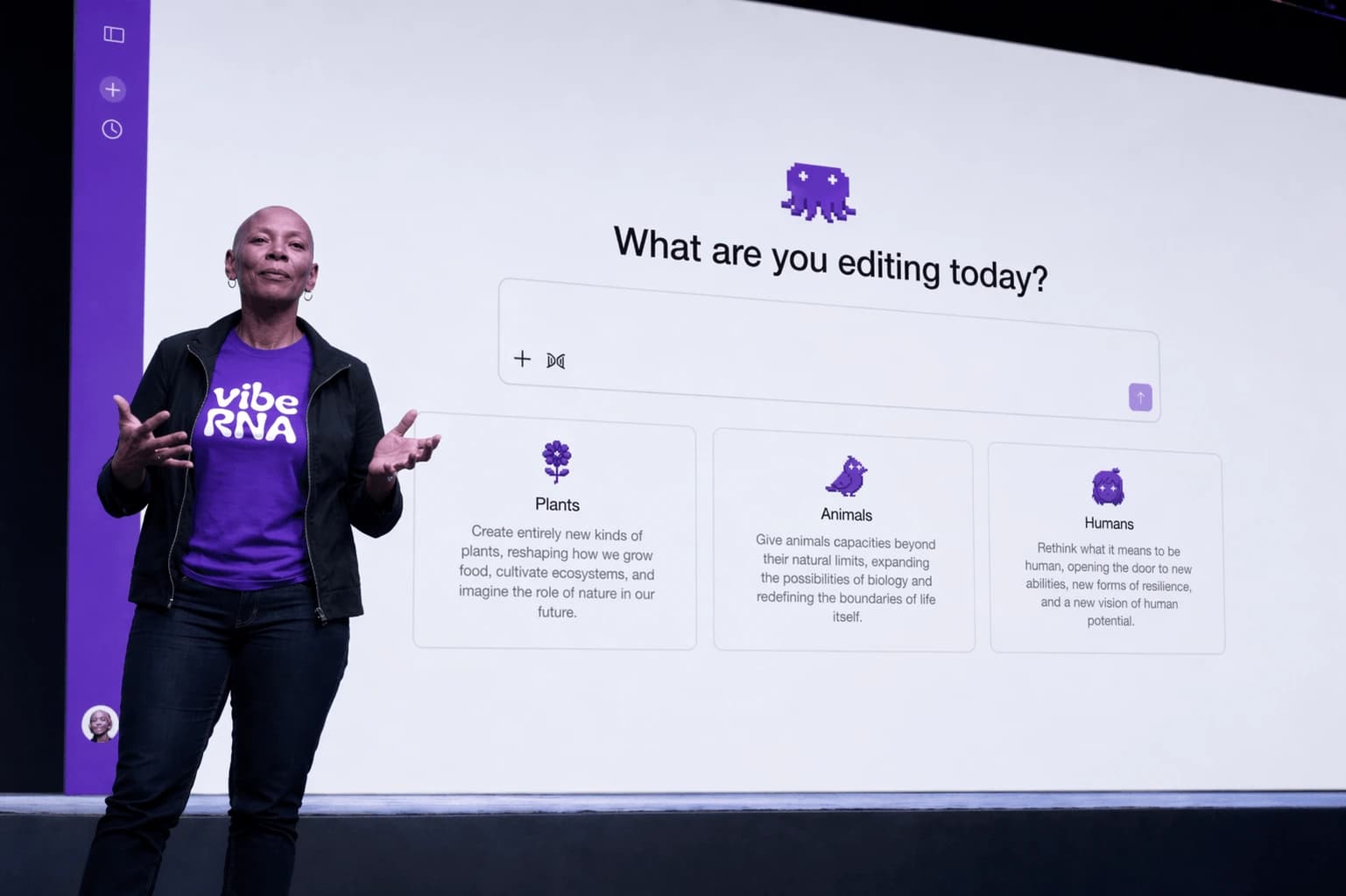
At a high level, the product is built around a deceptively simple experience: users make an edit or design choice on their computer, define what they want to change, and submit the request through the platform. From there, vibeRNA translates the request into a physical delivery workflow based on the user’s unique DNA, sending a personalized injectable package that enables the change to be applied and observed in real time. The long-term ambition is to make RNA editing feel less like laboratory work and more like a programmable consumer interface for biology.
Because the product is so radical, Ayana’s role in introducing it was critical. One of the key founder-brand moments was her appearance at a vibeRNA product launch, where she presented the product to the world in a way that made it feel less like a distant scientific abstraction and more like something people could actually imagine using. That moment helped bridge the gap between the product and the public, and showed why founder branding was so essential to the company in the first place.
Recognitions
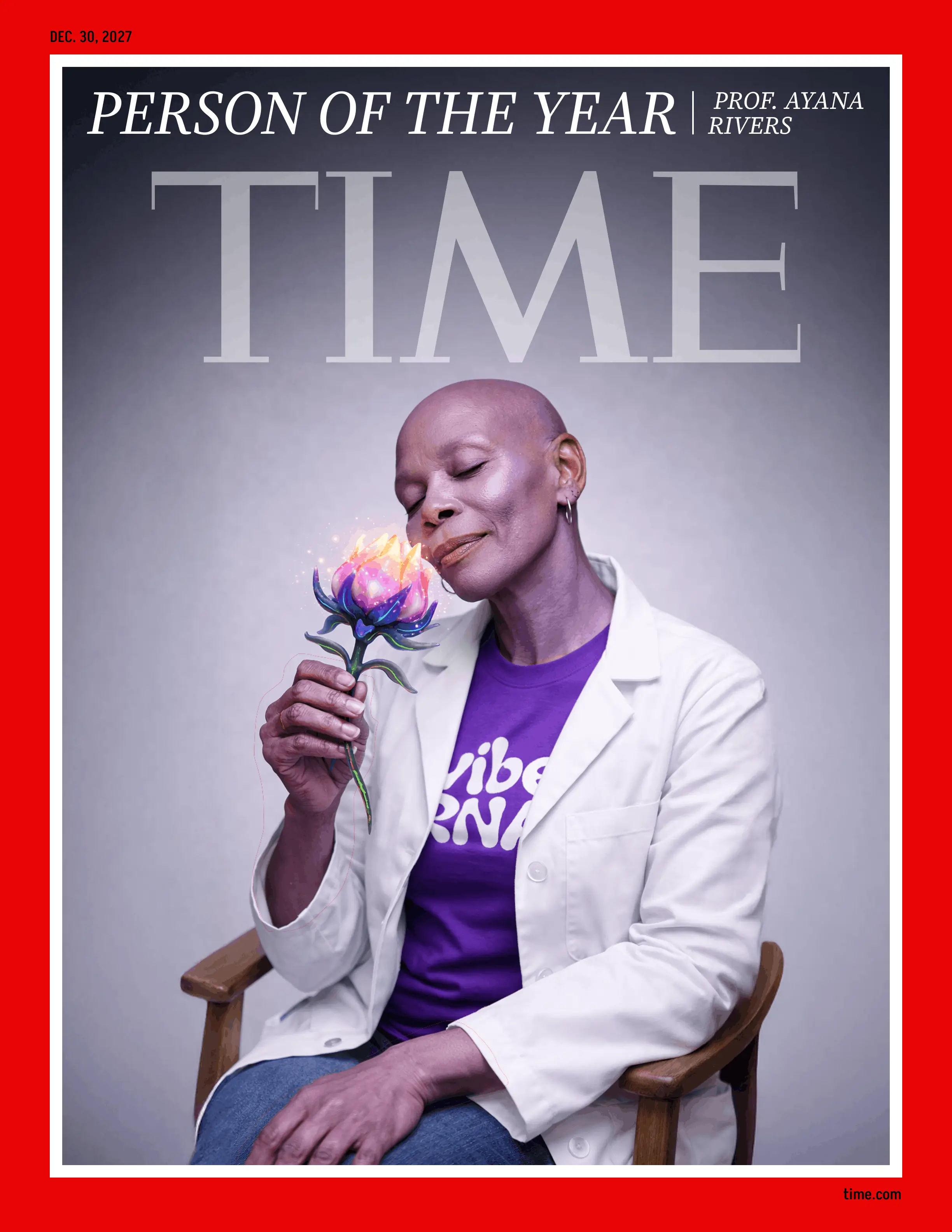
In 2027 Ayana was named TIME’s Person of the Year, and I had the opportunity to work on the cover and the broader visual framing around that moment. We chose to portray her in a quieter, more intimate way: seated simply, wearing a lab coat over the recognizable vibeRNA shirt, and smelling a flower from Nigeria that had been modified through RNA. The image was designed to show not only scientific power, but also tenderness - a moment of enjoyment, curiosity, and personal connection with the living world she is helping reshape.
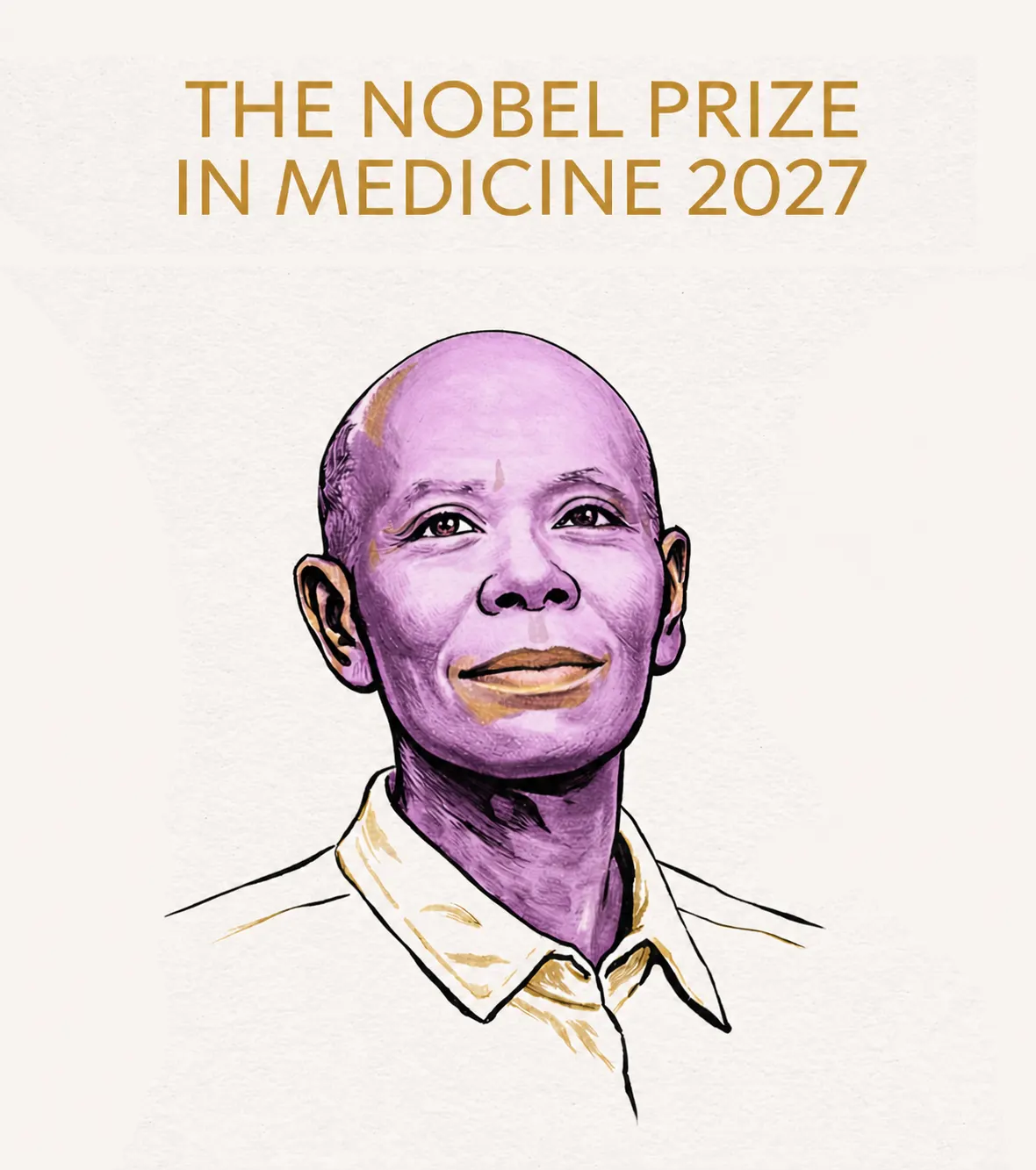
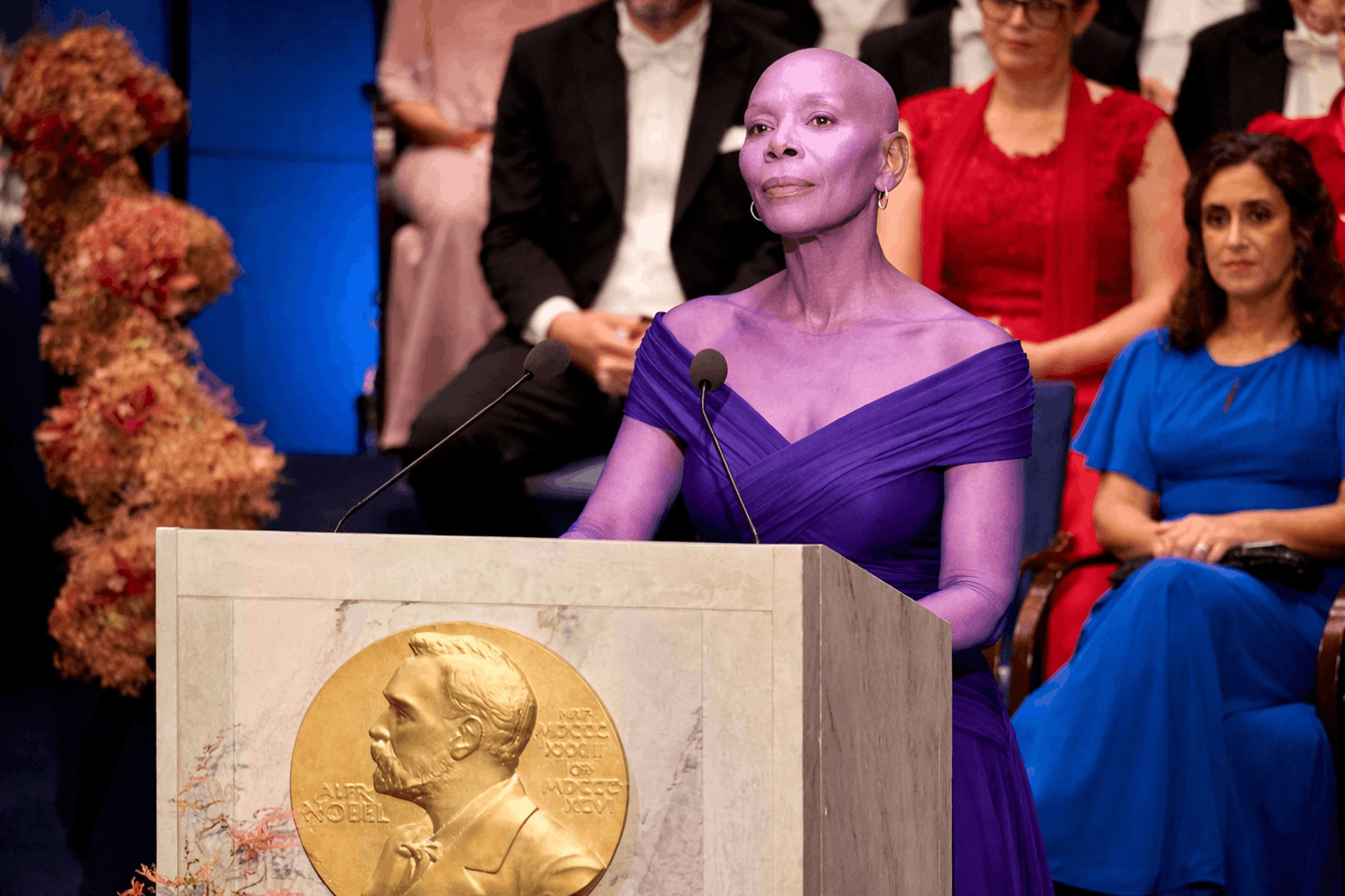
The peak of this journey came later that same year, when Ayana was selected to receive the Nobel Prize in Medicine 2027. Reaching that moment felt surreal. What began as a founder-branding job I found on AllJobs had grown into one of the highest forms of public recognition imaginable. Being able to take part in that chapter was deeply exciting.
During her speech, Ayana spoke not only about the scientific breakthrough, but about the responsibility of making biology more programmable without losing sight of humanity, ethics, and wonder. Seeing her stand on that stage - carrying both the weight of the science and the emotional clarity of the vision behind it - felt like the full realization of everything the brand had been building toward.
Conclusion
This project was about much more than making a founder look good in public. It was about designing the human interface to one of the most ambitious technologies of our time - a public presence that could make a scientific breakthrough feel understandable, trustworthy, and culturally alive.
Ayana had to make something potentially distant or intimidating feel credible, desirable, and human. Her founder brand needed to hold scientific authority, media presence, warmth, cultural relevance, humor, and emotional confidence at the same time. She had to feel like a world-class scientist, a category-defining founder, and someone people could genuinely connect with.
That is what made the work so meaningful. Across speeches, interviews, campaign imagery, social media, and public milestones, the goal was to build one coherent identity: visionary, credible, human, and unforgettable.
In the end, Ayana’s founder brand became a key part of how vibeRNA itself could be understood. It gave the company a face, a voice, and a cultural presence strong enough to make the future feel both real and exciting.